
Which startup will reverse blindness?
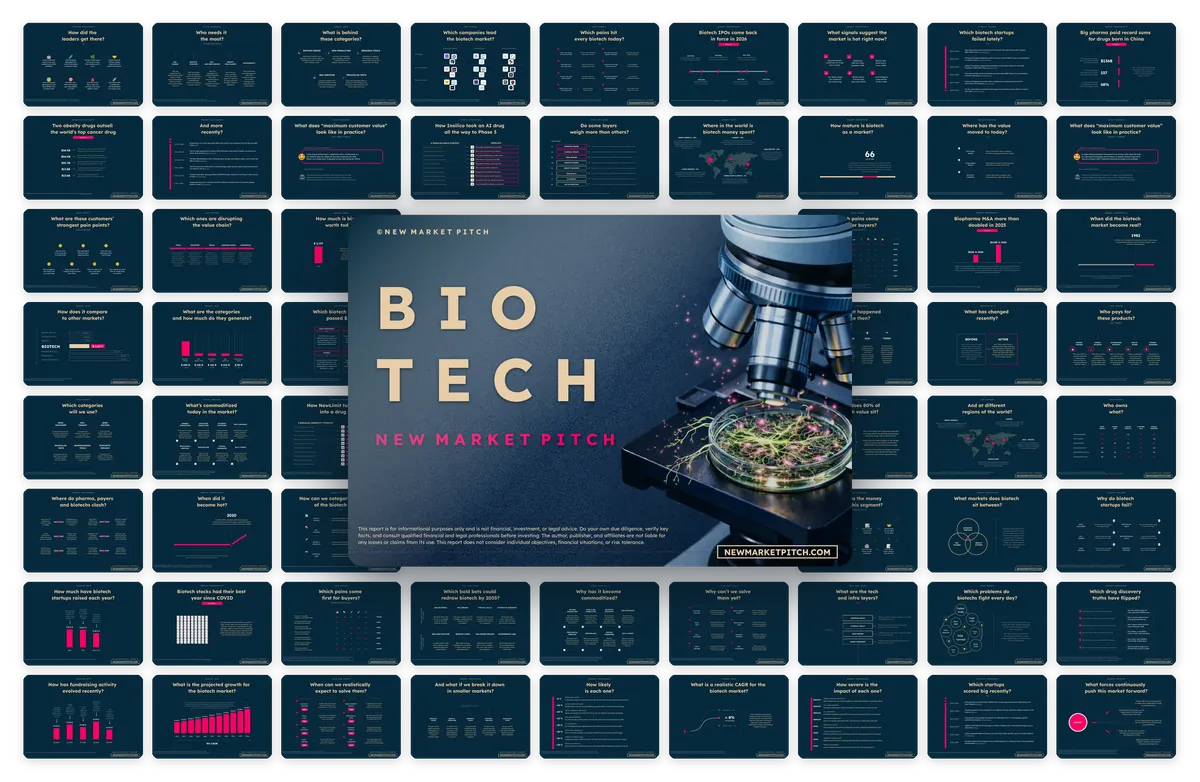
Building a startup or looking for your next investment in biotechnology? Our report gives you the full picture.
Summary
Science Corporation is the startup most likely to reverse blindness, and its Prima retinal implant has already restored useful central vision after photoreceptors died.
Prima leads because it has crossed three thresholds at once: peer-reviewed functional results, regulatory approval in Europe, and evidence that patients can use the system at home to read letters, numbers and words.
The result is real but limited. Prima creates a narrow, black-and-white central image through an implanted chip, camera-equipped glasses and a pocket processor rather than rebuilding natural vision.
Nanoscope Therapeutics is the strongest injectable challenger. Its MCO-010 gene therapy can make surviving retinal cells light-sensitive without surgery, external electronics or a mutation-specific treatment.
Nanoscope’s controlled trial probably shows a genuine effect, but it remains a small study. Only 18 patients received MCO-010, and fewer than half achieved a clear three-line improvement after one year.
The location of the damage decides how reversible blindness really is. Corneal disease can already be treated by replacing dysfunctional cells, retinal degeneration can sometimes be bypassed, and severe optic-nerve damage remains much further from a practical solution. Corneal disease, retinal degeneration and optic-nerve damage are very different problems, and we draw the line on what counts in our biotech market report.
Aurion Biotech has already restored vision in corneal blindness and launched its cell therapy in Japan. It is a commercial success in a narrower category, not the leader in rebuilding sight after neural retinal cells have died.
The first major winner may not deliver anything close to normal sight. A treatment that lets a previously blind person read large text, identify objects or navigate more safely can still be transformative.
Science Corporation’s biggest risk has shifted from proving that Prima works to proving that it can scale surgery, rehabilitation, reimbursement and long-term hardware support without repeating the failures of earlier bionic-eye companies.
Science Corporation leads today. Nanoscope has the clearest route to overtaking it later, but only if a larger trial shows that a simple injection restores useful vision for far more than a minority of patients.

Written by the New Market Pitch teamWe track new markets so founders and investors can move faster. About us

In our report covering the biotech market, we turn what is vague and complex into simple, useful visuals. Market maps like this one show you at a glance where every startup stands.
What does “reverse blindness” actually mean?
Reversing blindness means giving useful sight back after essential retinal cells have died, rather than correcting poor vision with glasses or removing a cataract.
The World Health Organization estimates that at least 2.2 billion people live with near- or distance-vision impairment. Many of those cases already have established treatments. Refractive errors can usually be corrected with lenses, while cataract surgery replaces a cloudy lens and often restores clear sight.
The harder problem begins when the eye can no longer turn light into a usable signal. Retinitis pigmentosa, Stargardt disease and geographic atrophy gradually destroy photoreceptors, the cells that first detect light. Glaucoma and traumatic injuries can damage the optic nerve that carries information from the eye to the brain.
For this article, we count a treatment as reversing blindness when a previously untreatable patient regains measurable and useful visual function. Reading ordinary text, identifying objects or navigating a room would all qualify. Detecting a flash of light alone sets the bar too low.
Normal sight is unnecessary for a startup to win this race. The treatment does, however, need to return enough vision to change what patients can do.
Which kinds of blindness can startups reverse today?
Startups can currently restore sight in selected corneal and retinal diseases, while severe optic-nerve and brain-related blindness remains largely beyond reach.
Corneal blindness is the easiest of these problems biologically. The cornea acts as the eye’s clear front window. Replacing dysfunctional corneal endothelial cells can remove swelling and restore transparency without rebuilding a neural network.
Retinal blindness is harder because a treatment must recreate light sensitivity after photoreceptors have disappeared. Science Corporation has now done this with an electronic retinal implant, while Nanoscope Therapeutics is trying to reprogram surviving retinal cells with a gene therapy. An electronic implant that works today and a gene therapy still in trials sit at different technology stages, which we sort in our report on biotech.
Damage further along the visual pathway remains a much tougher problem. A working retina cannot restore sight when a severely damaged optic nerve can no longer carry the information. Cortical implants may eventually bypass both the eye and optic nerve, but current systems create basic points or patterns of light rather than practical everyday vision.
| Site of damage | Leading startup approach | Best evidence currently available | Near-term outlook |
|---|---|---|---|
| Cornea | Cultured replacement cells | Aurion Biotech has a commercially launched treatment in Japan | Already feasible for selected diseases |
| Photoreceptors | Retinal implants and optogenetics | Science Corporation has European approval; Nanoscope has controlled trial results | The strongest blindness-reversal race |
| Retinal ganglion cells | Optogenetic reprogramming | Small early-stage trials from Ray Therapeutics and Bionic Sight | Promising but unproven |
| Optic nerve | Regeneration and neuroprotection | Mostly preclinical or exploratory human research | Unlikely to produce the first major winner |
| Visual cortex | Brain implants | Experimental visual perceptions in very small studies | Far from natural or practical sight |

Our research about biotech companies gets updated several times a month, so you always get the latest view of where things stand.
Why can a damaged retina suddenly be made to see again?
A damaged retina can produce sight again because the photoreceptors may be dead while much of the remaining visual circuit still works.
In a healthy eye, rods and cones detect light before passing information through bipolar cells and ganglion cells. The optic nerve then carries that information to the brain. Retinal degeneration often destroys rods and cones first, leaving parts of the downstream network alive.
Startups are exploiting those surviving cells in two main ways.
Science Corporation places a tiny photovoltaic chip beneath the damaged part of the retina. A camera in a pair of glasses captures an image and projects it onto the implant using near-infrared light. The chip converts that light into electrical pulses that stimulate nearby bipolar cells.
Nanoscope, Ray Therapeutics and Bionic Sight use optogenetics. Their treatments insert genetic instructions for a light-sensitive protein into surviving retinal cells. Once treated, those cells can respond directly to light and create a new route into the brain.
Neither approach recreates the original retina. Both build an alternative input system around cells that survived the disease. The quality of the resulting sight depends on how many cells can be reached, how precisely they can be stimulated and how well the brain learns to interpret the unfamiliar information.
Has a startup already reversed retinal blindness?
Science Corporation has already restored useful central vision in blind patients and has now received European approval to sell its Prima retinal implant.
Prima targets geographic atrophy, an advanced form of age-related macular degeneration that destroys the center of the visual field. Patients may retain peripheral sight while losing the ability to read, recognize faces or see an object directly in front of them.
The New England Journal of Medicine published the results of Science Corporation’s 38-person Prima study. Among the 32 participants assessed after one year, 26 achieved a clinically meaningful improvement in visual acuity. Twenty-seven could use the system at home to read letters, numbers or words.
European approval pushes Science Corporation ahead of every retinal-blindness startup today. Nanoscope has started a rolling US application, but that process remains underway. Ray Therapeutics is conducting an early human trial. Bionic Sight is also testing its treatment in small studies.
Science Corporation did not invent Prima from scratch. The underlying technology came from Stanford research and was previously developed by France’s Pixium Vision. Science acquired Pixium’s assets in 2024 and supplied the financing, engineering and regulatory work needed to bring the product to market.
That history does not weaken the answer. Startups often win by acquiring a technology that has stalled and turning it into a commercial product.
| Startup | Main technology | Strongest evidence | Current limitation | Position today |
|---|---|---|---|---|
| Science Corporation | Subretinal electronic implant | European approval after a 38-person pivotal study | Surgery, glasses and limited black-and-white vision | Overall leader |
| Nanoscope Therapeutics | Optogenetic gene therapy | Randomized sham-controlled trial and ongoing FDA submission | Only 18 treated patients in the controlled trial | Best injectable challenger |
| Ray Therapeutics | Optogenetic gene therapy | Early improvements reported in a phase 1 study | No detailed controlled efficacy results | Well-funded future challenger |
| Aurion Biotech | Corneal cell therapy | Commercially launched treatment in Japan | Treats the cornea rather than the retina | Leader in a narrower form of blindness |
| Bionic Sight | Optogenetic gene therapy | Early human improvements and two active programs | Evidence remains preliminary | Dark horse |

In our market report about biotech companies, we look at what the winners do differently, so you can learn from the best instead of guessing.
How much sight did Science Corporation’s Prima implant restore?
Science Corporation’s Prima implant restored enough central vision for most assessed patients to read, but the current product still delivers narrow, low-resolution and black-and-white sight.
The Prima study enrolled 38 people with severe central vision loss from geographic atrophy. Thirty-two completed the main visual assessment after one year. Of those, 81% improved by at least 0.2 LogMAR, equivalent to roughly two lines or ten letters on a standard eye chart.
The average improvement was much larger: about 0.5 LogMAR, or 25 letters. That works out to approximately five eye-chart lines. One participant gained 59 letters, approaching twelve lines.
Those numbers are striking in patients whose central retinal tissue had permanently died. Earlier retinal implants often helped people locate light or identify very large shapes. Prima allowed 84% of assessed participants to read letters, numbers or words at home.
The quality of the restored sight remains far below natural vision. The implant contains 378 pixels and produces a central image roughly comparable to 20/400 acuity before digital magnification. The glasses can zoom and increase contrast, allowing some participants to read much smaller characters, but the visible area remains narrow.
Patients also need to learn how to use the system. They combine natural peripheral vision with an artificial central image and adjust zoom, brightness and contrast for different tasks. Prima works more like a new visual tool than an instant return to the sight patients once had. Whether a visual aid is worth paying for depends on the problem it solves, and we study those patient problems in our market report about biotech.
Is Prima’s 38-person blindness trial convincing enough?
Prima’s 38-person trial convincingly shows that the implant can restore central vision, although it gives us less certainty about everyday independence and long-term surgical risk.
The study was prospective, multicenter and conducted across 17 European hospitals. Its results appeared in The New England Journal of Medicine, and the improvement was much larger than the threshold chosen before the study began.
Still, every participant received the implant. Researchers compared each patient’s vision before and after treatment rather than randomly assigning some patients to a sham operation. A masked control group would have produced cleaner evidence, but sham retinal surgery would also expose patients to substantial risks without a possible benefit.
The visual-acuity result is difficult to dismiss. Without Prima glasses, average central vision barely changed. With the system, average acuity improved by about 25 letters. That direct on-and-off comparison strongly links the restored vision to the device.
The broader quality-of-life evidence was less impressive. Although 69% of assessed participants reported medium or high satisfaction, the study’s main vision-related questionnaire did not detect a clear behavioral improvement after one year. Patients could read again without necessarily becoming more mobile or independent across every part of daily life.
Surgery also produced 26 serious procedure- or device-related adverse events across 19 participants. Most appeared during the first two months, and nearly all of those early events resolved within another two months. Reported complications included raised eye pressure, retinal breaks, macular holes, bleeding and one retinal detachment.
We can be highly confident that Prima creates useful artificial central vision. We should be less confident about how much that sight changes a patient’s overall independence.

In our document detailing everything you need to know about biotech, you will always find fresh funding data, taken straight from our own verified funding database.
Are Prima’s glasses and eye surgery a serious weakness?
Prima’s glasses and surgery make the treatment harder to use, but neither disadvantage currently outweighs the amount of vision the system restores.
The implant requires subretinal surgery, specialist surgeons and months of visual rehabilitation. Nanoscope’s competing treatment is delivered through an injection into the eye, a procedure retina specialists already perform routinely for other diseases.
Prima also works only when patients use its camera-equipped glasses and pocket processor. The glasses capture the scene, alter contrast or magnification and project an infrared version onto the implant. Patients therefore depend on external electronics, software updates, batteries and long-term hardware support.
Previous bionic-eye companies showed why that dependency can become dangerous. Second Sight stopped supporting its Argus retinal implant during financial difficulties, leaving patients with obsolete hardware inside their eyes. Science Corporation will need to support each Prima user for many years.
The hardware brings advantages too. Software can zoom text, sharpen edges and adapt an image before it reaches the retina. Future improvements may arrive through better image processing without another operation. Science can also design higher-resolution implants as fabrication improves.
The glasses preserve the patient’s remaining peripheral vision because their lenses are transparent. Users can look around naturally while activating prosthetic central vision for tasks such as reading.
A simple injection would clearly be easier. Right now, though, Prima is the system letting blind patients read, while the easier alternatives remain experimental.
Is Nanoscope the strongest drug-based blindness startup?
Nanoscope Therapeutics is currently the strongest drug-based contender because MCO-010 has produced controlled human results without requiring retinal surgery or electronic glasses.
MCO-010 is a one-time optogenetic gene therapy for advanced retinitis pigmentosa. The treatment uses a viral vector to deliver a light-sensitive protein into surviving bipolar cells. Patients receive it through an intravitreal injection, the same general route used for common retinal medicines.
Nanoscope designed the protein to respond to ordinary ambient light. Patients do not need a camera, external processor or specialized goggles. Once the treated cells begin producing the protein, the eye itself becomes the light-sensing system. A drug needing no external hardware is a different business from an implant, and we compare which models make money in our report covering the biotech market.
The treatment is also independent of the mutation that originally caused the disease. Researchers have linked retinitis pigmentosa to mutations across more than 80 genes. A conventional gene-replacement treatment usually works for one gene, while MCO-010 acts after the original photoreceptors have died.
Nanoscope has started a rolling Biologics License Application with the US Food and Drug Administration. The application remains underway, so describing MCO-010 as already submitted or awaiting a final decision would go too far.
Science Corporation leads the overall race because Prima has approval and stronger functional results. Nanoscope leads the narrower race to develop an injectable treatment that could work across several forms of retinal degeneration.

Learning from others' mistakes is the cheapest lesson there is. In our report covering the biotech market, we look at what broke startups before you, so you don't repeat it.
Did Nanoscope’s MCO-010 restore useful vision?
Nanoscope’s MCO-010 restored several lines of visual acuity in some profoundly blind patients, although the average patient remained severely visually impaired.
The RESTORE trial included 18 people treated with MCO-010 and nine who received a sham procedure. After one year, the two treatment doses gained approximately 0.34 and 0.38 LogMAR compared with the sham group. That corresponds to roughly three to four eye-chart lines.
The patients began with extremely poor sight. Average baseline acuity was around 2.2 LogMAR, a level associated with detecting hand movements rather than reading a conventional eye chart. A three-line gain from that starting point can help someone identify large objects or shapes, but it rarely allows ordinary reading or face recognition.
Longer follow-up has strengthened the durability case. Nanoscope has now reported average gains of roughly three lines after three years, without a treatment-related serious adverse event. Five-year follow-up from an earlier phase 1/2 study has also supported the therapy’s long-term safety.
Functional testing produced a less consistent picture. Patients reported improvements in activities involving near vision, distance vision, color and contrast. Several mobility and shape-recognition comparisons, however, failed to reach statistical significance.
MCO-010 appears to restore a limited visual channel rather than detailed sight. For someone who previously saw almost nothing, that channel can still be meaningful.
Can we trust Nanoscope’s 27-person trial?
Nanoscope’s controlled trial is strong enough to show that MCO-010 probably works, but far too small to tell us how reliably it will help the wider retinitis pigmentosa population.
RESTORE used a randomized, double-masked and sham-controlled design, which gives it an advantage over many early blindness studies. Patients and the people assessing them were not supposed to know who received the treatment.
The main weakness is scale. Only 18 patients received MCO-010. A few unusually strong responses can move the average substantially in a group that small, while uncommon safety problems may never appear.
The responder breakdown is more revealing than the average alone. Seven of the 18 treated patients achieved an improvement of at least three lines after one year, compared with one of nine sham patients. Eight treated patients showed no detectable acuity improvement at that assessment.
The results also varied over time. Some patients crossed the three-line threshold at later follow-ups, while others lost part of an earlier gain. Better baseline vision and a thicker surviving central retina appeared to predict stronger outcomes.
An independent panel convened by the Institute for Clinical and Economic Review voted 10–2 that the available evidence showed a net health benefit over usual care. That supports a real treatment effect without settling the response rate, ideal patient profile or everyday usefulness.
| RESTORE result | MCO-010 patients | Sham patients | Our interpretation |
|---|---|---|---|
| Participants in the main comparison | 18 | 9 | A rigorous but very small trial |
| At least a three-line gain after one year | 7, or 39% | 1, or 11% | A substantial minority clearly responded |
| No detectable acuity change after one year | 8, or 44% | Not reported on the same basis | Many treated patients gained no measurable acuity |
| Average treatment advantage | Roughly three to four lines | Reference group | The group-level effect was clinically meaningful |
| Follow-up through three years | Average gain remained around three lines | Sham comparison no longer maintained | Durability looks encouraging, but later evidence is uncontrolled |

In our research about biotech companies, we always try to gather several sources and make estimates that make sense, so you can work with solid numbers.
Could Nanoscope eventually beat Science Corporation?
Nanoscope could eventually beat Science Corporation if MCO-010 wins approval and produces useful sight across several retinal diseases with a simple injection.
Prima currently treats geographic atrophy caused by age-related macular degeneration. Nanoscope began with retinitis pigmentosa and is also developing MCO-010 for Stargardt disease and geographic atrophy.
A mutation-independent drug could cover a wider range of patients than conventional gene replacement. Retina specialists could inject it in an office, while Prima requires an operating room, an implant and rehabilitation with external hardware.
Nanoscope also avoids the long-term support problem attached to electronic devices. Once the eye expresses the light-sensitive protein, patients should not depend on a particular pair of glasses, processor or software platform.
Science Corporation holds a large advantage in the quality of restored sight. Prima patients gained an average of about five eye-chart lines, and most assessed users could read at home. MCO-010 produced an average advantage of three to four lines in a much smaller controlled trial, while fewer than half achieved a clear three-line response after one year.
The two products may eventually serve different patients. Prima could become the stronger option for detailed central tasks such as reading, while MCO-010 could offer a less invasive way to recover broader basic vision.
For Nanoscope to take the overall lead, the company needs to show that the injection helps more than a minority of patients and creates benefits beyond an eye-chart score. Approval alone would not erase Prima’s current evidence advantage. A larger trial showing benefit beyond an eye-chart score would help the market accelerate, and we weigh such growth drivers in our biotech market report.
Can Ray Therapeutics overtake Science Corporation and Nanoscope?
Ray Therapeutics has enough capital and scientific credibility to become a major blindness company, but its clinical evidence currently trails both Science Corporation and Nanoscope.
Ray’s lead treatment, RTx-015, is a one-time optogenetic injection for retinitis pigmentosa and choroideremia. Like MCO-010, it aims to make surviving retinal cells light-sensitive regardless of the patient’s original mutation.
The ENVISION phase 1 trial is open-label and non-randomized, with approximately 15 planned participants. Ray says treated eyes improved across every dose group tested so far. The company has yet to publish enough patient-level numbers for us to compare the size or consistency of those gains with Prima or MCO-010.
Regulators have reacted positively to the early evidence. The FDA recently granted RTx-015 Regenerative Medicine Advanced Therapy status, and the European Medicines Agency awarded it PRIME designation. Both programs can speed discussions with regulators, although neither proves that the treatment works.
Ray also raised an upsized $125 million Series B to fund later trials and commercial preparation. Across its seed round, Series A, government grant and Series B, publicly announced funding reaches roughly $239 million.
The company has the resources to run a larger and cleaner study than Nanoscope’s 27-person RESTORE trial. Its second treatment, RTx-021, targets Stargardt disease and geographic atrophy.
Ray may eventually produce a better optogenetic drug. Today, the company remains an early-stage challenger with encouraging claims and limited public data.

If you build or invest in the biotech market, you need to know which business models pay off now and which ones are fading. That's why our report covering it has a whole section on it.
Has Aurion Biotech already reversed blindness?
Aurion Biotech has already restored sight in people with corneal blindness, although its treatment solves a narrower and biologically easier problem than retinal degeneration.
Aurion’s Vyznova is a cultured corneal endothelial cell therapy for bullous keratopathy. When endothelial cells fail, fluid builds up inside the cornea, making the eye cloudy and painful. Doctors inject replacement cells into the eye so the cornea can become transparent again.
Japan approved Vyznova and began reimbursing the treatment before its commercial launch in 2024. Aurion currently operates as a commercial-stage company in Japan and is developing the therapy through phase 3 in the United States.
The manufacturing model could greatly expand the donor supply. Aurion says cells from one donor can produce as many as 1,000 doses. A conventional corneal transplant generally uses one donor cornea for one or two recipients.
Alcon acquired majority ownership of Aurion in 2025, giving the company the backing of one of the world’s largest eye-care businesses. That should help with clinical development, manufacturing and distribution.
Vyznova genuinely reverses severe vision loss. The qualification comes from anatomy: the treatment clears the eye’s front window while leaving the retina and optic nerve untouched.
Aurion is already winning the corneal-regeneration race. Science Corporation remains the stronger answer when we ask which startup can restore sight after neural retinal cells have died.
Could another startup produce better sight than Science Corporation?
Cell-replacement and next-generation optogenetics startups may eventually produce more natural sight, but none currently matches Science Corporation’s combination of functional results and approval.
Bionic Sight is testing BS01, which adds a light-sensitive protein to retinal ganglion cells. Early patients have reportedly regained light and motion perception, and the company has opened another trial in geographic atrophy. Its retinitis pigmentosa program has remained in phase 1/2 for several years, with no large controlled efficacy result. Programs that stay in early trials for years are a risk we rate by likelihood, with the less obvious ones, in our report on biotech.
jCyte injects retinal progenitor cells into patients with retinitis pigmentosa. These cells mainly release protective factors that may help surviving photoreceptors rather than replacing a complete retina. The approach could preserve or improve remaining vision, but it has yet to restore reading sight in advanced blindness.
Tenpoint Therapeutics is developing replacement photoreceptors for geographic atrophy. Successful cells could theoretically integrate into the retina and create richer vision than either an implant or optogenetic protein. Achieving that requires the cells to survive, connect correctly and transmit precise information for years.
Traditional gene-replacement companies face another limitation. Their treatments generally need the relevant photoreceptors to remain alive and target one causative gene. They may preserve excellent natural vision when given early, but they cannot easily revive an eye after those cells have disappeared.
The highest-quality future vision may come from biological cell replacement. The first practical reversal of retinal blindness has instead come from a chip, glasses and the surviving circuitry already present inside the eye.

Theory only gets you so far. In our document detailing everything you need to know about biotech, we dig up the real signals from the field and show you the ones worth watching.
What could still derail Science Corporation’s Prima launch?
Science Corporation could lose its lead if Prima proves too difficult to scale, too risky to implant or too limited for patients to use regularly.
Commercial approval begins a harder operational test. Science needs trained retinal surgeons, rehabilitation specialists, hardware support and reimbursement across several health systems. Each patient receives a permanent implant alongside external electronics that may need repairs or upgrades.
The pivotal trial also produced a meaningful surgical burden. Nineteen of 38 participants experienced at least one serious procedure- or device-related event. Most early problems resolved, but the rate will attract close attention as treatment expands beyond specialist research centers.
Patient enthusiasm may depend on expectations. Prima can restore reading vision, particularly when users zoom and enhance text. Current users do not regain color, a wide field of view, reliable face recognition or natural visual detail.
The system also asks elderly patients to learn a new kind of sight. Some will find the training worthwhile; others may prefer conventional magnifiers, audio tools or future drug treatments. The trial’s unchanged quality-of-life questionnaire suggests that gaining letters on an eye chart does not automatically transform every daily activity.
Science recently raised $230 million partly to fund commercialization and manufacturing. That financing substantially reduces near-term company risk, but retinal hardware has defeated well-funded businesses before.
Prima has crossed the scientific and regulatory line. The commercial line remains ahead.
Which startup will reverse blindness?
Science Corporation is the startup most likely to reverse blindness, and its Prima implant has already moved the answer from a prediction to an approved product.
Prima has restored central vision after photoreceptors died, produced an average gain of about five eye-chart lines and allowed 84% of assessed patients to read letters, numbers or words at home. The results appeared in a major peer-reviewed journal, and European approval now allows the company to begin treating commercial patients.
The outcome remains partial. Prima creates black-and-white vision through a narrow central window. Patients need retinal surgery, external glasses, a processor and significant training. The pivotal study involved only 38 people and recorded frequent surgery-related complications.
Nanoscope Therapeutics is the strongest alternative. MCO-010 could offer a one-time injection that works without glasses and across many genetic causes of retinal degeneration. Its randomized evidence is credible, but only 18 patients received the treatment and fewer than half achieved a clear three-line improvement after one year. The company’s FDA submission is still rolling rather than complete.
Ray Therapeutics has the funding to challenge Nanoscope, although its human trial remains too early for a serious claim to leadership. Aurion Biotech has already restored corneal vision and may build a substantial business, but it does not solve neural retinal blindness.
Our judgment has changed with the latest evidence: Science Corporation leads the overall race today. Nanoscope leads the race for a simpler injectable treatment and remains the startup most capable of taking the crown later.
Our methodology
This analysis tests which startup is closest to reversing blindness in a way that changes what patients can actually do. We define reversal as restoring measurable, useful vision after previously untreatable damage, rather than correcting refractive error, removing a cataract or merely detecting flashes of light.
We compared the companies across the dimensions that determine leadership in this field: the site of damage being treated, the quality of restored vision, trial design, number of treated patients, durability, safety, regulatory status, commercial readiness and the practical burden placed on patients.
We gave the most weight to peer-reviewed clinical results, controlled trials, regulatory decisions and functional outcomes such as reading letters, identifying shapes or using a system at home. Early company announcements, regulatory designations and funding rounds were treated as supporting evidence rather than proof of efficacy.
The comparison covers retinal implants, optogenetic gene therapies, corneal cell replacement and earlier-stage biological approaches. This allows Science Corporation, Nanoscope Therapeutics, Ray Therapeutics, Aurion Biotech, Bionic Sight, jCyte and Tenpoint Therapeutics to be judged on demonstrated patient benefit as well as future potential.
Key sources include the World Health Organization on vision impairment and blindness, The New England Journal of Medicine for the Prima clinical study, Science Corporation’s Prima materials, Nanoscope Therapeutics’ MCO-010 program, Ray Therapeutics, Aurion Biotech, FDA guidance on Biologics License Applications, FDA guidance on RMAT designation, the European Medicines Agency’s PRIME framework, the Institute for Clinical and Economic Review, and ClinicalTrials.gov records for Prima, MCO-010 and RTx-015.

In our report covering the biotech market, we don't want to repeat what boring consulting reports say. Instead, we show you the real and latest market signals that matter.
Written by the New Market Pitch teamWe track new markets so founders and investors can move faster. About us