
Which states are blocking data centers?
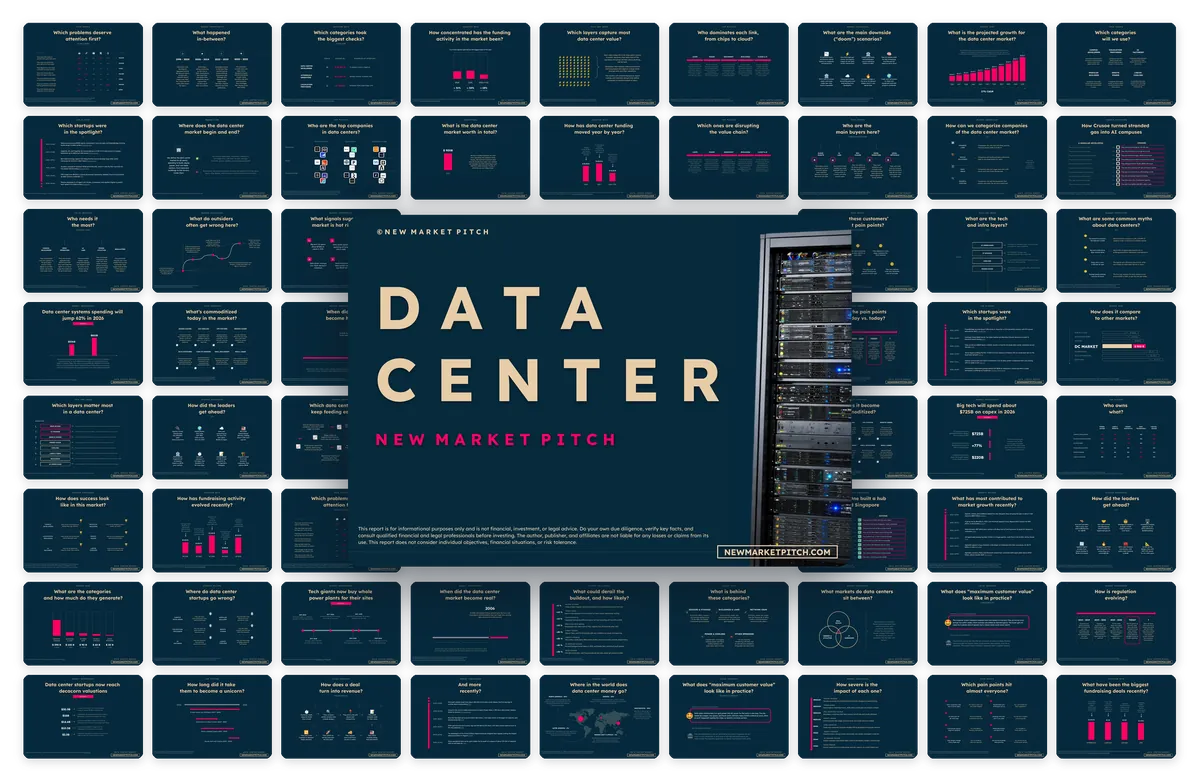
Whether you're building or investing in the data center market, our report covers everything you need to know: the players, the money, and what's coming next.
Summary
New York and Texas are currently the two states imposing the broadest statewide restrictions on new data center approvals. Pennsylvania has tightened its requirements, while dozens of other states are seeing local bans, zoning prohibitions, and temporary construction pauses. The backlash is widespread, but it has not stopped the US data center construction boom.
The biggest distinction is between statewide restrictions and local moratoriums. A city can prohibit data centers without preventing construction elsewhere in its state, whereas New York's and Texas's permitting directives can affect multiple developments simultaneously.
The number of restrictions sounds more alarming than their immediate construction impact. SemiAnalysis identified more than 300 local moratoriums but found only three projects materially delayed in the development pipeline it examined. Many projects already had permits, suitable zoning, or enough scheduling flexibility to continue. Most projects already had permits and kept going, so we ask whether the market is overbuilt or still full in our data center market report.
Different trackers tell different stories because they measure different things. Data Center Census records 112 moratorium-related actions across 27 states, while Programs.com's broader tracker identifies restrictions across 45 states. Neither figure represents a count of canceled data centers.
Opposition is nevertheless becoming expensive. Data Center Watch identified approximately $198 billion in announced investment associated with projects blocked or delayed during the first half of 2026, already exceeding its comparable full-year 2025 estimate by roughly 27%. That money is at risk of delay, relocation, or cancellation, rather than necessarily being permanently lost.
New York and Texas represent a more consequential form of intervention. Their statewide measures target permitting and infrastructure oversight, meaning developers cannot necessarily solve the problem by moving outside a particular municipality. The eventual regulatory conditions could matter more than the temporary pauses themselves.
Permanent zoning prohibitions are another serious obstacle. A short moratorium may fit within a developer's existing schedule, but a municipality that removes data centers from permitted land uses can effectively eliminate an otherwise attractive site.
The politics are less partisan than they might appear. Democratic and Republican governors have both supported restrictions, while Maine's Democratic governor vetoed a proposed statewide pause to protect an industrial redevelopment opportunity. Local economic interests can override broader political positioning.
Electricity infrastructure may ultimately constrain construction more than local opposition does. Grid-connection delays, transmission upgrades, generating capacity, and uncertainty over who pays for new infrastructure can hold up projects even when every local planning approval has been secured.
The decisive question is whether today's temporary restrictions become lasting financial or regulatory barriers. For now, US data center development is being redirected and selectively delayed, not broadly stopped. New York's and Texas's next regulatory decisions, alongside the ability of electricity grids to serve planned campuses, will determine how much the construction boom actually slows.

Written by the New Market Pitch teamWe track new markets so founders and investors can move faster. About us

In our report covering the data center market, we always try to gather several sources and make estimates that make sense, so you can work with solid numbers.
Which states are actually blocking data centers right now?
New York and Texas currently have the broadest statewide restrictions on new data center approvals, while cities and counties across dozens of other states have introduced their own bans or construction pauses.
New York Governor Kathy Hochul signed Executive Order 62 on July 14, 2026, establishing a one-year pause on certain environmental permits for new hyperscale data centers. Texas Governor Greg Abbott followed on September 21, directing the Texas Commission on Environmental Quality to suspend data center permitting until electricity and water audits are completed.
Pennsylvania has also tightened state approval requirements, while Michigan, Ohio, Georgia, North Carolina, Indiana, Florida, and Virginia have seen numerous local restrictions. The National Conference of State Legislatures identified statewide moratorium proposals in at least 16 states during 2026, although many were rejected, vetoed, or left pending.
A state can still welcome data center investment even when individual municipalities prohibit construction. The difference becomes much more serious when a governor suspends approvals across an entire state, as New York and Texas have done.
| State | Main restriction | Current position |
|---|---|---|
| New York | Statewide environmental permitting pause for hyperscale facilities | In effect |
| Texas | Statewide permitting hold tied to electricity and water audits | In effect |
| Pennsylvania | Stricter conditions on state approvals | In effect |
| Michigan | Numerous municipal restrictions; statewide pause proposed | Local restrictions active |
| Ohio | Municipal moratoriums and zoning restrictions | Local restrictions active |
| Georgia | Local bans and pauses; statewide moratorium proposed | Local restrictions active |
| North Carolina | Multiple city and county moratoriums | Local restrictions active |
| Indiana | County bans and extended city moratoriums | Local restrictions active |
| Florida | County pauses and some permanent zoning prohibitions | Local restrictions active |
| Virginia | Local restrictions, litigation, and statewide proposals | Local restrictions active |
| Colorado | Denver and other local moratoriums | Local restrictions active |
| Washington | City and county pauses, including Seattle and Spokane | Local restrictions active |
Are US states permanently banning data centers or just delaying construction?
Most US data center restrictions currently suspend new approvals for a limited period, although some cities and counties have adopted permanent prohibitions.
A moratorium usually gives local officials time to introduce zoning rules, environmental standards, or infrastructure requirements. Denver adopted a one-year pause, while Seattle introduced emergency restrictions. Neither approach necessarily prevents a developer from building once new regulations are in place.
San Marcos, Texas, took a stronger position. In June 2026, the city council voted 4-3 to exclude data centers from its zoning districts. Harford County, Maryland, also adopted a countywide prohibition, while some municipalities in New Jersey and Rhode Island have removed data centers from permitted land uses. Towns and counties dropping data centers from permitted land uses is recent, and we go through what changed in the last 12 months in our data center market report.
A six-month moratorium might be absorbed into an existing construction schedule. A permanent zoning ban can force a project to relocate, and finding another site with sufficient electricity, fiber connections, and industrial land is rarely straightforward.

In our research about data centers, we don't want to repeat what boring consulting reports say. Instead, we show you the real and latest market signals that matter.
How many data center bans are there across the United States?
More than 300 US municipalities have voted to pause data center development in roughly 18 months, according to research published by SemiAnalysis in September 2026.
Other trackers produce different totals because they count different types of restrictions. Programs.com's October 2026 tracker identifies active bans or moratoriums across 45 states, including measures adopted since January 2022. Data Center Census separately records 112 moratorium-related actions across 27 states.
The Data Center Census figure includes extensions, rejected proposals, and judicial reversals, while broader trackers count more individual local measures. We cannot combine these totals into one definitive national figure.
What is clear is how widely the restrictions have spread. Data center moratoriums now appear in traditional computing hubs such as Virginia and Texas, along with newer development markets including Michigan, Wisconsin, Iowa, Kentucky, and North Carolina.
Opposition groups have expanded even faster. Data Center Watch reported that the number of active groups increased from 396 at the end of 2025 to 833 by the end of March 2026. That is a 110% increase in just one quarter, with organized opposition documented across 49 states.
Which states have introduced the most local data center restrictions?
Ohio, North Carolina, Georgia, Michigan, and New York are among the states recording the most local data center restrictions, although the ranking depends on which actions a tracker includes.
Data Center Census records 15 moratorium-related actions in Ohio, 13 in North Carolina, and 11 in Georgia. California, Michigan, and New York each have eight documented actions in the same dataset.
These numbers reveal where local governments have been especially active, but they are not a ranking of which states have actually stopped the most construction.
A state receiving hundreds of development proposals will naturally generate more public hearings, zoning decisions, and disputes than one attracting little investment. The restrictions may also differ considerably in scope. A short municipal pause counts as one action, just like a longer county prohibition.
Michigan is a useful example. SemiAnalysis identified 45 local moratoriums in the state, yet those restrictions had not prevented a Google campus from advancing on land already zoned for industrial development.
| State | Actions recorded by Data Center Census | Main characteristic |
|---|---|---|
| Ohio | 15 | Repeated municipal pauses |
| North Carolina | 13 | Restrictions across cities and counties |
| Georgia | 11 | Local bans alongside statewide proposals |
| California | 8 | Municipal restrictions and environmental scrutiny |
| Michigan | 8 | Local moratoriums in a growing development market |
| New York | 8 | Local restrictions alongside a statewide pause |
| Maryland | 5 | County bans despite failed statewide legislation |
| Indiana | 4 | County restrictions and Indianapolis moratorium |
| Minnesota | 4 | Local pauses after unsuccessful statewide proposals |
| South Carolina | 4 | Local measures and proposed statewide restrictions |
| Texas | 4 | Statewide directive with broader reach than the local count |
The figures represent documented actions in this particular tracker rather than all active moratoriums.

In our market report about data centers, we like to show you the big picture. We know your time is precious, so we make every page quick to read and packed with as much learning as possible per minute.
Is New York the first state to ban new data centers?
New York became the first state to impose a statewide moratorium specifically targeting new hyperscale data center permitting, although the restriction is temporary and does not cover every facility.
Governor Kathy Hochul signed Executive Order 62 on July 14, 2026, introducing a one-year pause on certain discretionary environmental permits for large developments. The measure generally targets facilities with peak electricity demand above 50 megawatts, while completed applications and smaller projects may receive different treatment.
The governor's office explained that the pause would allow the state to develop stronger rules governing transmission infrastructure, electricity costs, environmental impacts, and benefits for host communities. Rules on transmission and electricity costs are still being written, so we look at the biggest unsolved problems in our report on data centers.
New York lawmakers had also passed the Responsible Data Center Development Act, which proposed restrictions affecting facilities above 20 megawatts. That legislative proposal must be considered separately from the executive order already in effect.
Hochul additionally announced plans to pursue legislation repealing sales-tax exemptions for massive data centers.
Taken together, these measures make New York one of the most restrictive states for new hyperscale developments. Facilities that already secured the necessary approvals could face considerably less disruption.
Has Texas really stopped approving new data centers?
Texas has ordered a statewide halt to new data center permits, making it one of the country's toughest jurisdictions for projects that still need environmental approvals.
On September 21, 2026, Governor Greg Abbott directed the Texas Commission on Environmental Quality to stop issuing permits sought by data centers until ERCOT and the Texas Water Development Board complete audits of proposed developments.
Abbott also instructed other state agencies to withhold related regulatory approvals until the necessary information becomes available. His administration wants developers to demonstrate that their electricity and water requirements will not compromise resources needed by existing customers.
The enforcement of the directive is already being challenged. An October investigation by the Houston Chronicle reported that Public Citizen and FracTracker identified at least 16 permit applications that appeared to continue moving through administrative processes after Abbott's announcement.
Texas regulators disputed that interpretation and maintained that no prohibited permits had been approved. Processing an application and issuing final approval are two different things, and that distinction is central to whether the order has been breached.
Texas also presents a contradiction. It remains a major destination for AI infrastructure investment, partly because of its energy resources, available land, and relatively favorable business environment.
The state's new restrictions therefore affect a market where developers had strong reasons to build. If the permitting hold continues beyond the audit period or leads to tougher permanent rules, Texas could become a major source of delays for projects that previously looked relatively straightforward.

In our document detailing everything you need to know about data center, we turn what is vague and complex into simple, useful visuals. Market maps like this one show you at a glance where every startup stands.
Why did Maine reject a statewide data center ban?
Maine rejected a proposed statewide data center moratorium because Governor Janet Mills believed it would unnecessarily block redevelopment of a former paper mill.
LD 307 would have temporarily restricted certain large data centers exceeding 20 megawatts while the state developed a broader oversight framework. The proposed pause would have extended into November 2027.
Mills vetoed the legislation on April 24, 2026, despite supporting the principle of stricter oversight. Her main objection concerned a proposed development at the former Androscoggin Mill in Jay, which closed in 2023.
That closure had already deprived the community of a major industrial employer. A data center offered the possibility of reusing the site and attracting new investment, although the number of permanent jobs would likely be much smaller than at a traditional manufacturing plant.
The Maine case exposes a difficult trade-off. Rules designed to prevent unwanted developments can also kill projects that struggling communities actually want.
Are Virginia and Maryland starting to reject data centers?
Virginia and Maryland are becoming harder places to build certain data centers, particularly where projects face opposition over electricity infrastructure, land use, and neighborhood impacts.
Virginia remains the country's largest established data center market. The US Energy Information Administration has connected the state's sharp increase in commercial electricity demand to its concentration of data centers, while PJM Interconnection expects Dominion Energy's service territory to experience substantial demand growth through 2030.
The pressure is especially visible in Northern Virginia. Prince William County's proposed $24.7 billion Digital Gateway development, involving QTS and Compass Datacenters, has faced years of opposition and legal challenges.
Other developers have withdrawn or revised projects after encountering local resistance. In Henrico County, DC BLOX withdrew a proposed development worth approximately $500 million in November 2024 before pursuing revised plans for the site.
Maryland has taken a somewhat different approach. A proposed statewide prohibition, HB 120, failed, but Harford County adopted a countywide data center ban in June 2026.
Neither state has imposed a comprehensive statewide construction ban. Still, projects in contested locations can now face years of legal, planning, and infrastructure-related uncertainty.
Virginia deserves particular attention because the state already hosts so much computing capacity. Restrictions in an established market can affect expansions close to existing electricity and network infrastructure, making relocation more complicated than it would be for a completely new development.

Our report covering the data center market gets updated several times a month, so you always get the latest view of where things stand.
Why are Florida and North Carolina blocking more data centers?
Florida and North Carolina are seeing more local data center restrictions as communities question whether large facilities will put too much pressure on electricity, water, and land.
In Florida, Palm Beach, Leon, Martin, and Manatee counties have introduced temporary pauses. Broward County was also considering a one-year restriction on large facilities in unincorporated areas. Pauses arriving county by county leave developers with a patchwork, so we size up who is ahead, and who is falling behind, in our report covering data centers.
North Carolina has seen restrictions across several different cities and counties. Charlotte introduced a 150-day pause in June 2026, Asheville approved a one-year moratorium, and Greensboro adopted a 180-day restriction on facilities requiring at least 10 megawatts. Surry County went further with a two-year measure.
The geographic spread is revealing. Charlotte is a major metropolitan economy, whereas Surry County is much more rural. Both have reasons to scrutinize projects that may need substantial electricity infrastructure while occupying comparatively little land.
Neither Florida nor North Carolina has enacted a blanket statewide ban. For developers, the fight is increasingly local: state economic-development officials may welcome a multibillion-dollar project, only for the county responsible for zoning to reject it.
Why are local communities so opposed to new data centers?
The biggest concerns behind local data center opposition are electricity costs, water consumption, noise, land use, and the relatively small number of permanent jobs created by very expensive facilities.
Consider the electricity requirements. A 100-megawatt data center operating continuously at full load would consume about 876 gigawatt-hours annually. A 500-megawatt campus would require 4.38 terawatt-hours under the same assumptions.
Those figures assume continuous operation at full load rather than predicting actual consumption, since facilities do not necessarily operate at full contracted capacity throughout the year. They nevertheless show why a single development can require major grid upgrades.
Water use is more complicated because it depends heavily on cooling systems, climate, and operating conditions. Some data centers consume substantial amounts of water through evaporative cooling, while others use designs intended to reduce direct water consumption.
The employment argument also matters. Building a hyperscale campus can support thousands of construction jobs, but day-to-day operations are much less labor-intensive than traditional manufacturing. Communities sometimes see multibillion-dollar investment announcements without an equivalent number of long-term positions.
Then there are the immediate neighborhood concerns: cooling equipment, backup generators, transmission lines, building height, and visual impact. People living beside one of these facilities may care more about those issues than the size of the investment announcement.

In our research about data centers, you will always find fresh funding data, taken straight from our own verified funding database.
Are electricity shortages a bigger problem for data centers than local bans?
Electricity shortages and grid connection delays are currently a more serious nationwide constraint on data center growth than most individual local moratoriums.
PJM's long-term forecasts show data centers driving substantial electricity demand growth across its territory, especially in Virginia. Texas has introduced statewide audits of proposed electricity connections, while New York's moratorium directly addresses the infrastructure costs associated with large new facilities.
The scale is enormous. Goldman Sachs projected in October 2026 that global data center electricity demand could rise by approximately 170% between 2025 and 2030, with the United States accounting for more than 60% of the increase.
A one-gigawatt data center cluster operating continuously at full load would require 8.76 terawatt-hours per year. Supporting multiple clusters of that size means building generating capacity, substations, and transmission lines that can take years to complete.
The problem is already affecting equipment deployment. Business Insider reported in October 2026 that Amazon was purchasing billions of dollars of Nvidia AI server equipment before some AWS facilities had enough electricity to operate it, leaving hardware temporarily stored rather than installed in active data centers.
A developer might obtain every local permit and still have to wait for a utility connection. Moving to a nearby county does little good if the regional grid lacks capacity.
Are the 300-plus US data center bans actually stopping construction?
Most local data center moratoriums have had surprisingly little effect on construction so far, according to a detailed review of the US development pipeline by SemiAnalysis.
The firm's September 2026 research examined more than 300 local restrictions and compared their locations with planned data center projects. It found that only three projects faced meaningful delays directly attributable to the moratoriums.
The affected projects represented approximately 1.5 gigawatts of capacity under local restrictions, with a separate statewide action in New York bringing the broader figure to roughly 2.3 gigawatts.
SemiAnalysis examined approximately 21 gigawatts of development associated with affected areas. The 2.3 gigawatts therefore represented about 11% of the capacity under consideration, although that figure includes the additional statewide impact and should not be treated as a national cancellation rate.
Several practical reasons explain the limited disruption. Some facilities already had permits, others were located on industrially zoned land, and many moratoriums were too short to interrupt construction schedules.
In Michigan, for example, Google's proposed campus was able to proceed because the relevant land was already appropriately zoned. Around Brownsville, Texas, changes to municipal boundaries also demonstrated how local restrictions can sometimes be avoided by locating development outside a city's jurisdiction.
SemiAnalysis projected approximately 38 gigawatts of US data center IT capacity for 2027. The 2.3 gigawatts potentially delayed represents roughly 6% of that figure, although installed capacity and delayed projects are different measures.

In our market report about data centers, we look at what the winners do differently, so you can learn from the best instead of guessing.
How much data center investment has actually been blocked?
Local opposition disrupted US data center projects representing approximately $198 billion in announced investment during the first half of 2026, according to Data Center Watch.
The organization identified at least 75 projects worth roughly $130 billion that were blocked or delayed in the first quarter. It recorded another 45 projects valued at approximately $68 billion in the second quarter. With $130 billion of projects blocked or delayed in one quarter, we follow which investors are making the biggest bets in our data centers market report.
That gives at least 120 reported quarterly disruptions across the six-month period.
For comparison, Data Center Watch estimated that projects representing approximately $156 billion were affected during all of 2025. The first-half 2026 amount was therefore about 27% larger than the previous full-year figure.
The increase is substantial, although we cannot assume that every dollar represents investment permanently lost. The research covers projects experiencing delays as well as outright cancellations, and reporting methods may have evolved as opposition became more widespread.
A developer forced to postpone a campus for six months may still spend the original amount. Another may relocate, reduce its planned capacity, or cancel the investment entirely.
These figures also help explain why Data Center Watch reports much greater disruption than SemiAnalysis. Data Center Watch follows projects affected by community opposition, while SemiAnalysis tests whether moratoriums have materially delayed construction within a mapped development pipeline. They are measuring different outcomes.
| Period | Reported projects blocked or delayed | Announced investment affected |
|---|---|---|
| May 2024–March 2025 | Not directly comparable | $64B |
| Q2 2025 | 20 | $98B |
| Full year 2025 | Dozens | Approximately $156B |
| Q1 2026 | At least 75 | Approximately $130B |
| Q2 2026 | At least 45 | Approximately $68B |
| First half of 2026 | At least 120 quarterly disruptions | Approximately $198B |
| H1 2026 versus full-year 2025 | Different observation periods | Approximately 27% higher |
The periods overlap in places, so the rows should not be added together. The first-half 2026 figure combines only the two quarterly reports.
Are data center developers leaving states that impose bans?
Data center developers are abandoning or redesigning individual projects because of local opposition, but there is little evidence of a widespread retreat from entire states.
Tract withdrew a proposed $14 billion development in the Goodyear and Buckeye area of Arizona in May 2024 after encountering rezoning opposition. The company subsequently pursued another development near Buckeye's airport, showing that the original project's failure had not ended its interest in Arizona.
In Missouri, Diode Ventures' proposed $1.5 billion Harper Road Technology Park in Peculiar was blocked after local authorities changed zoning rules.
Provident Realty Advisors also withdrew a proposed $1.3 billion data center development in Chesterton, Indiana, following community objections.
These cases show how local opposition can eliminate specific sites, particularly when developers need zoning changes or approvals they have not yet secured.
But abandoning a site and abandoning a state are very different decisions. Relocating a large campus involves more than finding available land. Developers must also consider electricity connections, water access, network infrastructure, environmental permits, and proximity to customers. Where those requirements can still be met nearby, the investment may simply move rather than disappear.

If you build or invest in the data center market, you need to know which business models pay off now and which ones are fading. That's why our document detailing everything you need to know about data center has a whole section on it.
Are states worried that data centers will raise electricity bills?
Protecting household electricity bills has become one of the strongest arguments for restricting data center development in New York, Texas, Pennsylvania, and other states.
The concern is that utilities may need to build new transmission lines, substations, and generating capacity to serve enormous computing facilities. If developers do not cover enough of those costs, households and smaller businesses could end up paying for infrastructure they did not require.
New York's executive order specifically calls for stronger ratepayer protections. Texas Governor Greg Abbott has directed developers to pay for the infrastructure associated with their electricity demand. Pennsylvania has also emphasized grid commitments in its approval process.
These concerns do not mean every data center necessarily raises residential electricity prices. Large customers paying substantial fixed charges under long-term contracts can help utilities recover infrastructure costs.
The real financial risk appears when utilities invest billions of dollars based on projected demand that later fails to materialize, or when regulators allow costs attributable to new data centers to be spread too broadly.
States are increasingly trying to ensure developers carry more of that risk, which can make some projects financially unattractive even without a formal construction ban.
Are Republican or Democratic states more likely to ban data centers?
Both Republican- and Democratic-led states are restricting data centers, and opposition has become too widespread to associate with one political party.
Democratic Governor Kathy Hochul introduced New York's statewide moratorium, while Republican Governor Greg Abbott ordered Texas's permitting hold.
Maine offers a different example. Democratic Governor Janet Mills vetoed a proposed statewide pause because of its potential effect on an industrial redevelopment project. Elsewhere, local restrictions have appeared in politically different communities, from Denver to San Marcos and rural counties across the Southeast.
The concerns also cross traditional political divides. Residents may object to public subsidies, increased utility bills, water consumption, or the loss of local control over development. Environmental concerns can overlap with arguments about protecting taxpayers.
Data Center Watch documented active opposition groups across 49 states during the first quarter of 2026.
That shows how far the backlash has spread, although it does not establish that Republican and Democratic officials adopt restrictions at identical rates.

When you build or invest in the data center market, you need clarity, not confusion. In our report covering the data center market, we always try to put numbers on and quantify whatever is usually vague and confusing.
Which states could impose tougher data center restrictions next?
Michigan, New Jersey, Pennsylvania, Georgia, South Carolina, Vermont, and Delaware are among the states where proposals could lead to tougher data center restrictions, although several measures still lack sufficient support to become law.
The NCSL identified moratorium proposals across at least 16 states during 2026. Many have already failed, been vetoed, or remained under consideration, so the introduction of a bill is a weak predictor of its eventual passage. Most of these bills fail, so a proposal alone means little; we separate what is real today from what is still hype in our report on data centers.
Michigan has considered a pause extending into April 2027, while New Jersey lawmakers proposed a six-month moratorium. Pennsylvania has debated a three-year restriction alongside its existing approval conditions.
Georgia has considered a statewide pause extending into 2028, and Vermont has examined restrictions lasting as far as 2030. Delaware's proposals have focused on very large facilities exceeding 100 megawatts.
Virginia deserves particular attention despite the absence of a comprehensive statewide ban. Its enormous existing data center concentration means future decisions about grid connections, infrastructure costs, and land use could affect a substantial amount of planned computing capacity.
Texas and New York will also be important to follow as their temporary measures approach the next stage of regulatory review. The question is whether current pauses expire, are extended, or are replaced with permanent requirements.
| State | Existing pressure or proposed restriction | What to watch |
|---|---|---|
| Michigan | Proposed statewide pause through April 2027 | Whether legislation advances |
| New Jersey | Proposed six-month moratorium | Whether a statewide pause is adopted |
| Pennsylvania | Three-year proposal and existing approval conditions | Whether stricter rules become permanent |
| Georgia | Proposed statewide restrictions through 2028 | Whether local opposition drives state legislation |
| South Carolina | Proposed suspension pending oversight rules | Development of a statewide approval framework |
| Vermont | Proposed restrictions lasting to 2030 | Whether lawmakers support a lengthy pause |
| Delaware | Proposed restrictions for facilities above 100 MW | Treatment of the largest projects |
| Virginia | Local disputes and statewide proposals | Grid costs and future approval requirements |
| New York | Existing one-year environmental permitting pause | Rules introduced after the pause |
| Texas | Statewide permitting hold pending audits | Audit findings and resumption of approvals |
Which states are blocking data centers, and is the US construction boom really in danger?
New York and Texas are currently the strongest examples of states blocking new data center approvals, while Michigan, Ohio, Georgia, North Carolina, Virginia, Florida, Indiana, and several others are seeing significant restrictions at the local level. The backlash is real, but it has not yet stopped the nationwide construction boom.
SemiAnalysis identified more than 300 local moratoriums but found only three projects materially delayed within the pipeline it studied. Data Center Watch, using a broader definition of disruption, identified roughly $198 billion in announced projects affected by opposition during the first half of 2026.
Both findings are important. Community resistance is now large enough to disrupt major investments, yet many restrictions have little immediate effect on facilities that already have permits and construction plans.
We see a more serious potential obstacle in the statewide rules emerging in New York and Texas, alongside mounting electricity infrastructure constraints. Those issues can affect multiple projects simultaneously and may be harder for developers to avoid by moving a few miles outside municipal boundaries.
The evidence points to a fairly clear conclusion: the United States is becoming much more restrictive about where data centers can be built and who must pay for the infrastructure they need. For now, those restrictions are slowing or redirecting selected projects rather than bringing AI data center construction to a halt.
The real test will be whether temporary moratoriums become enforceable permanent limits and whether electricity shortages begin delaying a substantial share of projects that already have financing, customers, and construction commitments.
Our methodology
To determine which US states are actually blocking data centers, we examined the question across several dimensions: statewide permitting restrictions, local moratoriums, permanent zoning prohibitions, legislative proposals, community opposition, affected investment, construction delays, and electricity infrastructure. We assessed recent evidence within each dimension before bringing the findings together to determine where restrictions are genuinely limiting development.
We gave the greatest weight to measures already in force and to documented project outcomes. Proposed legislation was evaluated separately from enacted restrictions, while local moratorium counts were compared with project-level evidence to test whether they had actually delayed construction. We also distinguished announced investment facing opposition from capital permanently lost, since the two measures can lead to very different conclusions about the scale of disruption.
A central part of the analysis was comparing independent datasets rather than treating their headline figures as interchangeable. We used SemiAnalysis to assess the effect of restrictions on planned capacity, Data Center Census and Programs.com to examine their geographic spread, and Data Center Watch to evaluate opposition and investment exposure. We then considered electricity-demand forecasts and grid constraints to assess whether legal restrictions or physical infrastructure presented the greater threat to future construction.
Our assessment prioritizes original regulatory documentation, identifiable development outcomes, and research with a clear measurement basis. Aggregating those findings across the different dimensions allows us to distinguish states generating political controversy from those imposing meaningful barriers, while identifying the conditions most likely to change the national construction outlook.
Key sources include the New York Governor's announcement of the statewide moratorium, New York's official executive-order register, the Texas Governor's permitting directive, the original Texas data center audit directive, the National Conference of State Legislatures' state-by-state review, and Maine's official legislative record for LD 307.
For the national comparison and construction-impact analysis, we relied on SemiAnalysis's investigation of moratoriums and planned capacity, Data Center Census's moratorium tracker, its state-level statistics, Programs.com's national tracker, and Data Center Watch's first-quarter and second-quarter 2026 research. Electricity infrastructure findings were assessed against the US Energy Information Administration's analysis of Virginia, PJM Interconnection's load-forecast documentation, and Goldman Sachs's research on AI infrastructure bottlenecks.

A good product starts with a real problem. In our research about data centers, we show you the ones customers still live with.
Written by the New Market Pitch teamWe track new markets so founders and investors can move faster. About us