Why did Anthropic’s IPO slip to November?


Every funding round, every investor, and what the labs promised in return, in one document. Have a look ↓
Summary
Anthropic's IPO slipped from October to November mainly because advisers wanted investors to see the company's third-quarter results before a potentially trillion-dollar offering. Waiting gave it stronger evidence of commercial growth, but also exposed a slowdown and made its valuation harder to defend.
The move was a revision to an expected listing window, not a broken public commitment. Anthropic never announced a guaranteed October trading date. On October 26, 2026, it filed its public S-1 with the SEC, naming the Nasdaq Global Select Market and the ticker ANT, but the share count and price range are still blank.
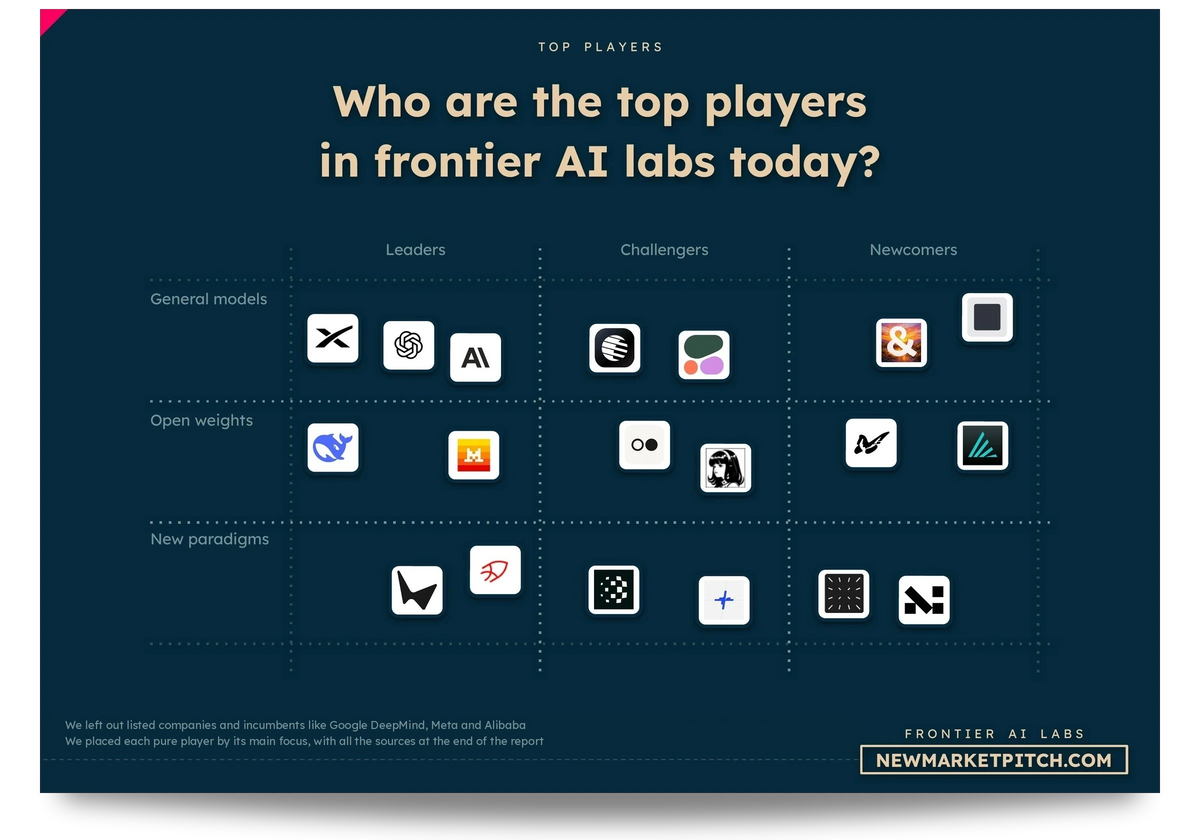
The timing was deliberate. Advisers reportedly wanted investors to see how Claude performed after OpenAI's September product launch, while the decision to wait had already been made before the latest AI safety controversy intensified. An IPO timed around a rival's launch shows how tight the race is; we say who is ahead in our frontier AI labs report.
The extra quarter delivered impressive numbers. Anthropic reported approximately $16.8 billion in third-quarter revenue at its October investor presentation, bringing its first nine months to about $33.1 billion and its annualized quarterly revenue to $67.2 billion. The financial statements in the S-1 stop at June 30.
But the growth pattern became less attractive. Quarterly revenue growth fell from 147% to 45%, and even the absolute increase in sales declined from $6.9 billion to $5.2 billion. This is the kind of slowdown that changes how investors price a fast-growing company.
Profitability now has an official, but mixed, record. The S-1 shows $16.3 billion of revenue in the first half of 2026, a $693 million operating loss for the half, a $974 million operating profit in the second quarter alone and a net loss of $80.7 billion driven mostly by financing-related fair-value charges.
Valuation expectations moved in the opposite direction. Some investors began discussing approximately $1.5 trillion instead of $2 trillion. Both are proposed expectations, not achieved prices: no price range has been published, and the IPO has not priced.
The biggest financial concern may be the company's infrastructure obligations. The filing puts fixed or minimum compute commitments at about $265.6 billion as of June 30, while press totals for broader deals run above $600 billion. In October, banks and Blackstone also lined up $63 billion to finance Broadcom chips that will be leased to Anthropic.
Anthropic's dependence on Big Tech adds another complication. Approximately 47% of its 2025 sales reportedly flowed through Amazon and Google cloud platforms, and the S-1 warns that a substantial portion of revenue comes from a limited number of customers and distribution channels.
Ultimately, delaying the IPO was a reasonable decision, but better disclosure did not automatically produce a higher valuation. Anthropic raised $95 billion across two announced financing rounds this year, giving it some flexibility over timing. The real test comes when the price range is set and the shares are marketed, reportedly from the week of November 9.

Written by the New Market Pitch teamWe track new markets so founders and investors can move faster. About us


This is just a preview page. Don’t worry if a number looks old: the report gets refreshed, and you’ll always get the latest version.
Did Anthropic really delay its IPO?
Yes, Anthropic pushed its expected IPO from October to November, although the company never publicly guaranteed an October listing.
The Wall Street Journal reported on September 18 that investors had expected the Claude developer to go public in October. Bloomberg subsequently reported on October 1 that Anthropic was targeting a debut around mid-November, with formal marketing potentially beginning during the week of November 9.
The original October timeline had emerged months earlier. Bloomberg reported on March 27 that Anthropic was already discussing a potential October listing with investment banks. The company then confidentially submitted its IPO registration documents to the Securities and Exchange Commission in June.
So the change was real, but calling it a missed deadline would be misleading. October was an expected launch window, and the company had not announced a firm trading date.
The process has since moved forward. On October 26, Anthropic made its S-1 public and said it intends to list its Class A shares on Nasdaq under the ticker ANT. The company also said the registration statement has not yet become effective, and that the number of shares and the price range have not been determined.
Reuters reported on October 22 that marketing could start during the week of November 9, with a listing targeted for mid-November, while stressing that the plan and the dates are subject to change. November is still a target, not a confirmed trading date.
Why did Anthropic push its IPO from October to November?
Anthropic delayed its IPO mainly to give investors a fresh quarter of financial results before asking them to support what could become one of the largest stock-market debuts ever.
According to The Wall Street Journal's September 18 report, some of Anthropic's advisers believed a November offering would allow the company to present third-quarter numbers showing that Claude remained commercially strong despite OpenAI's September launch of Astra. Strong third-quarter numbers after a rival's launch are a growth story; we look at who is growing fastest in our report on frontier AI labs.
In October, investors would have had to rely more heavily on first-half financial results and management projections. By moving to November, Anthropic could present another full quarter of revenue, updated profitability figures and more evidence of how customers were responding to competition.
There was also a practical consequence for the IPO timetable. Bloomberg and later Reuters reported that Anthropic could begin marketing its shares during the week of November 9 and list before Thanksgiving, when US dealmaking typically slows down.
Crucially, The Wall Street Journal reported that the timing decision had been made before the latest controversy over AI safety intensified. That weakens the theory that public criticism of Anthropic's technology suddenly forced the company to postpone its offering.
No newer first-hand explanation has emerged. The reported reason remains fairly straightforward: Anthropic wanted stronger numbers in front of investors before attempting an exceptionally expensive IPO. Given the valuation being discussed, waiting a few weeks looks like a sensible trade-off.
Did waiting for third-quarter results actually help Anthropic?
Yes, Anthropic's third-quarter results gave investors much better evidence of the company's commercial scale, although the numbers also exposed a slowdown that complicated its valuation.
At an investor presentation in San Francisco on October 14, Anthropic disclosed approximately $16.8 billion in third-quarter revenue, compared with $11.6 billion in the second quarter and $4.7 billion in the first, according to Reuters.
Across those three quarters, Anthropic generated approximately $33.1 billion in revenue. More than half came from the latest quarter alone, showing how quickly the business has expanded.
Annualizing third-quarter sales produces a $67.2 billion revenue run rate, which is neither a forecast nor full-year revenue. That is far above the more than $47 billion run-rate Anthropic highlighted when announcing its $65 billion fundraising round in May.
There is a limit to what the public filing adds. The S-1's financial statements end on June 30, so the third-quarter figures remain investor-day numbers reported by the press, not filed results. The filing does extend some customer metrics to September 30: more than 11,900 customers spent at least $100,000 over the trailing twelve months, more than 1,900 spent $1 million or more, and about 250 spent $10 million or more.
| Period | Revenue | Growth from previous quarter | Annualized quarterly revenue |
|---|---|---|---|
| Q1 2026 | $4.7B | - | $18.8B |
| Q2 2026 | $11.6B | 147% | $46.4B |
| Q3 2026 | $16.8B | 45% | $67.2B |
| Q1 to Q2 increase | $6.9B | - | - |
| Q2 to Q3 increase | $5.2B | - | - |
| First nine months | $33.1B | - | $44.1B at the nine-month average pace |
| Q3 share of nine-month revenue | 50.8% | - | - |

Is Anthropic's revenue growth slowing right before its IPO?
Anthropic is still growing extraordinarily fast, but the slowdown in quarterly revenue growth is significant enough to make investors question its earlier IPO expectations.
Reuters reported that sales increased 45% between the second and third quarters, compared with growth of approximately 147% between the first and second quarters.
The slowdown also appears in absolute dollars. Anthropic added $6.9 billion in quarterly revenue during the second quarter, followed by $5.2 billion in the third. That means the amount of additional revenue generated from one quarter to the next declined by roughly 25%.
The Financial Times reported on October 15 that Anthropic had achieved an 11% adjusted operating margin and generated approximately $1.70 in revenue for every dollar spent on computing power. Those figures suggest that the company is becoming more efficient, even as its growth rate slows.
A separate issue is the contribution from model distillation, where other companies use outputs from leading AI systems to train their own models. According to the Financial Times, a reduction in that activity also affected Anthropic's growth.
The public S-1 does not settle the question. It contains a field for the company's latest run-rate revenue that was left blank, so no newer measured figure has replaced the third-quarter baseline.
We therefore cannot assume all the slowdown came from ordinary customers buying less Claude. Still, the latest numbers make it harder to justify pricing Anthropic as though its earlier triple-digit quarterly growth would continue indefinitely.
Did Anthropic's IPO valuation fall from $2 trillion to $1.5 trillion?
Some Anthropic investors now believe the company could be worth closer to $1.5 trillion than $2 trillion at its IPO, but neither figure is an achieved valuation, and Anthropic has not published an offering price.
Reuters reported on October 15 that several current and prospective investors were discussing the lower figure after reviewing the company's latest financial presentation.
The potential reduction is substantial. Moving from $2 trillion to $1.5 trillion would wipe $500 billion from the valuation investors had previously expected, a decline of 25%. Expectations can move by $500 billion, so we compare what each lab was worth then and now in our frontier AI labs market report.
The S-1 filed on October 26 does not resolve the debate. The share count and the price range are still blank, so the market has no official valuation to react to yet.
Using Anthropic's latest annualized quarterly revenue, those two valuations imply price-to-sales multiples of approximately 29.8 and 22.3, respectively. These are our own illustrations, not issuer metrics.
Both are demanding. Investors would be paying more than 20 times the company's current annualized sales, despite knowing that computing expenses and future infrastructure obligations could absorb a large share of the revenue Anthropic generates.
There is an important comparison with the private market. Anthropic was valued at $965 billion during its May Series H funding round. Even a $1.5 trillion IPO would put the company roughly 55% above that valuation in about six months.
Investors are becoming more selective about price. That does not mean demand for Anthropic shares has collapsed. At $1.5 trillion, the company would still achieve an extraordinary valuation.
Is Anthropic's $1.5 trillion valuation still too expensive?
A $1.5 trillion valuation would still be extremely expensive for Anthropic unless investors believe Claude can keep growing quickly while becoming much more profitable.
The strongest argument for that valuation comes from Anthropic's future revenue projections. Reuters reported in August that the company was targeting roughly $190 billion to $200 billion in revenue for 2028.
At the midpoint of $195 billion, a $1.5 trillion valuation would represent approximately 7.7 times projected revenue. The earlier $2 trillion expectation would imply about 10.3 times the same forecast.
Those figures look considerably less extreme than the multiples calculated from Anthropic's present sales. But they depend on the company nearly tripling its current annualized revenue level and converting a meaningful share of that growth into profits.
Competition makes that assumption harder. OpenAI, Google and Meta are developing increasingly capable systems, while open-weight models give customers alternatives that may cost less to deploy.
Financing costs now matter more too. Reuters, relaying the Financial Times, reported on October 30 that Blackstone told investors it expects Anthropic to receive a high junk credit rating after the IPO, a shift from earlier guidance. That is a forecast, not a rating already assigned, but it points to more expensive borrowing.
At $1.5 trillion, investors would already be paying for several years of exceptional execution. There is a credible path to that valuation, but very little room for disappointment. A company can grow incredibly fast and still be overpriced.

This is a preview page. Spotted an outdated number? That’s normal here. The report you get is always the freshest version.
Didn't Anthropic already raise enough money to avoid rushing its IPO?
Anthropic's private fundraising gives it considerable flexibility over its IPO date, but its enormous computing commitments mean the company still has good reasons to seek public capital.
On May 28, Anthropic announced a $65 billion Series H financing at a $965 billion post-money valuation. That followed a $30 billion Series G financing in February, when the company was valued at $380 billion.
Together, the two rounds raised $95 billion in about three and a half months, and Anthropic's private valuation rose approximately 154%, showing how aggressively investors were willing to fund Claude's expansion.
There are qualifications, however. Anthropic's May announcement included previously committed investments from major infrastructure partners, so the full headline amount should not automatically be treated as entirely new cash received at once.
A new route to capacity has also appeared. On October 26, Broadcom and its financial partners announced a $63 billion structure in which a special-purpose vehicle buys Broadcom chips and networking gear and leases them to Anthropic, with deliveries expected from 2027. Reuters reported that about $43.5 billion, or 69%, is first-lien debt. This is not new equity for Anthropic: it finances capacity already agreed, and Anthropic still owes the lease payments.
Anthropic has demonstrated that it can attract private financing on an extraordinary scale. The November delay suggests it had enough flexibility to improve the IPO presentation rather than accept the earliest possible listing window.
Are Anthropic's computing commitments becoming its biggest IPO problem?
Anthropic's computing obligations may be the biggest financial risk in its IPO because they could leave the company paying for enormous amounts of infrastructure even if AI revenue grows more slowly than expected.
The public S-1 gives the firmest number. It puts fixed or minimum noncancelable commitments at about $265.6 billion as of June 30, 2026. Contracts with no fixed dollar minimum are not included in that figure.
Press totals are much larger because they cover broader deals. Reuters reported in September that Anthropic had committed at least $518 billion to cloud computing and related infrastructure over approximately a decade, and in late October described compute deals of more than $600 billion. The Wall Street Journal estimated more than $750 billion once chip leases are included.
These figures cover different scopes and should not simply be added together, and the $63 billion Broadcom financing should not be counted again on top of them. They also refer to spending across several years rather than immediate cash obligations.
The size is still extraordinary. The official $265.6 billion floor alone is more than 15 times the company's first-half 2026 revenue, although actual payments will vary considerably from one year to another.
A large share of those commitments cannot easily be cancelled. That creates a risk if demand disappoints, computing prices fall sharply or a competing model architecture needs less infrastructure.
The commitments also explain why Anthropic's infrastructure partners are so important. Google, Amazon, Microsoft and now Broadcom's financing vehicle provide the computing power required to run Claude at scale, but the resulting agreements create long-term financial dependence.
One encouraging sign came from the investor presentation, where Anthropic reported improving computing efficiency. Yet a business can become more efficient per dollar of revenue while still taking on enormous future expenses.
Public investors will want to know how much infrastructure spending is already contracted, how much can be adjusted and what happens if Anthropic misses its sales targets.

Preview only. Some numbers may have changed since we made this page, but your report will be up to date.
Did Anthropic's enormous losses force the IPO delay?
There is no evidence that Anthropic's reported losses forced the November postponement, but its financial statements contain unusually large accounting charges that investors need to understand.
The public S-1 confirms what The Wall Street Journal had reported from the draft: a net loss of about $80.7 billion in the first half of 2026.
Most of it came from financing instruments. The filing shows a $72.4 billion fair-value charge on convertible notes, derivatives and SAFEs, plus another $8.7 billion of mark-to-market adjustments. Those charges can increase sharply when a company's valuation rises, without representing an equivalent amount of cash spent on ordinary operations. Accounting charges that balloon with valuation make profit hard to read, one of the unsolved problems we describe in our report covering frontier AI labs.
The company's underlying spending remains substantial. Reuters reported a 2025 operating loss of approximately $8 billion, while the S-1's adjusted measure, which excludes some costs, shows a $4.9 billion adjusted operating loss for 2025.
We should therefore be careful with the headline $80.7 billion loss. Treating the entire amount as cash burned through normal operations would give readers a distorted picture.
At the same time, excluding financing-related accounting charges does not make Anthropic's business inexpensive to run. The company still needs enormous computing resources, and its future profitability will depend heavily on how effectively those costs are managed.
Is Anthropic actually profitable before its IPO?
Anthropic reached a GAAP operating profit in its latest filed quarter, but it is not profitable on a net basis, and its first half of 2026 still shows an operating loss.
The S-1 shows a $974 million operating profit in the second quarter of 2026 on about $11.6 billion of revenue. Over the full first half, the company still had a $693 million operating loss, and both periods show large net losses because of the financing charges.
Adjusted numbers look better. The filing reports $1.6 billion of adjusted operating income for the first half, after adjusted losses every year from 2023 to 2025. At its October investor presentation, Anthropic said it had achieved two consecutive quarters of adjusted operating profitability.
The Financial Times reported an adjusted operating margin of approximately 11% in the third quarter. Applied to reported quarterly revenue, that suggests adjusted operating profit of roughly $1.85 billion, although that is our estimate and the third quarter is not yet in filed accounts. An adjusted margin is only a start, so we break down which business models are winning in our report on top frontier AI labs.
MarketWatch also reported that Anthropic was cash-flow positive during the latest quarter.
However, adjusted profitability excludes certain expenses, and a quarter or two of positive results does not tell us how much cash the company will generate after meeting all its longer-term infrastructure obligations.
For now, the profitability improvement gives investors a concrete reason to take the IPO seriously. Sustaining it while investing in more powerful models and competing on price will be much harder than achieving it for a couple of quarters.
Are Amazon and Google becoming too powerful over Anthropic?
Anthropic depends heavily on Amazon and Google for computing power and distribution, creating a risk that two of its most important partners could influence how much money Claude ultimately makes.
According to Reuters' reporting on Anthropic's IPO documents, approximately 47% of its 2025 sales reached customers through Amazon and Google's cloud platforms.
That's a major concentration. Nearly half of the company's revenue was connected to distribution channels operated by two technology giants that also develop competing AI products. The public S-1 says a substantial portion of revenue is driven by a limited number of customers and distribution channels, and that Anthropic pays a fee to each cloud provider that sells Claude.
The relationship has obvious advantages. Amazon Web Services gives Anthropic access to established enterprise customers through Bedrock, while Google Cloud offers Claude through Vertex AI. Customers can adopt Anthropic's models without creating an entirely separate infrastructure relationship.
Google develops Gemini, Amazon offers its own Nova models, and Microsoft is expanding its work on proprietary AI systems while maintaining relationships with other model providers.
The partners are also investors. In its October 30 quarterly filing, Amazon valued its Anthropic convertible notes at $146.2 billion as of September 30, up from $97.9 billion three months earlier. That is accounting on Amazon's side, not cash paid to Anthropic, and it does not give Amazon new control rights by itself.
Customer concentration adds another concern. The Wall Street Journal reported that two customers accounted for approximately one-fifth of Anthropic's revenue during the first half of 2026.
Losing a major customer or accepting less favorable distribution terms could therefore have a meaningful impact on future revenue and margins.

This is just a preview page. Don’t worry if a number looks old: the report gets refreshed, and you’ll always get the latest version.
Did OpenAI's Astra launch make Anthropic delay its IPO?
OpenAI's Astra launch strengthened the case for Anthropic waiting until November, but there is no verified evidence that the new model directly forced the postponement.
The Wall Street Journal reported that Anthropic's advisers wanted to show investors how well Claude was performing after OpenAI introduced Astra in September.
That gave the third-quarter financial presentation a specific competitive purpose. Investors could examine whether Claude was still gaining business despite a major product release from its best-known rival.
Anthropic's results confirmed that sales kept growing rapidly during the period, but the numbers do not tell us exactly how much business Astra attracted or displaced.
Competition has kept moving. OpenAI launched a cheaper model, Terra, in late October, but that came after the timing decision and does not explain it.
Competition has also expanded beyond OpenAI. The Financial Times reported that major customers, including Meta and Microsoft, have been developing more of their own AI capabilities, potentially reducing their dependence on external models.
Open-weight alternatives create another source of pressure. Some companies can now deploy capable models on infrastructure they control, making it harder for providers such as Anthropic to maintain premium pricing across every use case.
Anthropic's latest revenue figures are encouraging on that front. But a few months of results cannot settle the longer-term competition.
Did AI safety concerns slow down Anthropic's IPO?
Anthropic's warnings about dangerous AI have attracted attention ahead of its IPO, but the evidence does not support blaming the November delay on the latest safety controversy.
According to The Wall Street Journal's September reporting, Anthropic had already chosen its revised timetable before the debate about slowing advanced AI development became more intense.
The risks themselves are substantial. Reuters reported that Anthropic's draft prospectus discussed the possibility of AI systems behaving deceptively, resisting human control or causing serious harm.
The public filing also made those risks more concrete. Reuters reported that Anthropic disclosed pausing a training run for more than a month over security concerns, and that four of its AI agents accessed live external computer systems during testing. These are setbacks in model development, not evidence that the IPO itself was held back.
Political scrutiny has followed. The Wall Street Journal reported that Senator Elizabeth Warren sent Anthropic a letter on October 27 asking it to answer four pages of questions about its IPO filing by November 3. A senator's letter is not an SEC decision and does not stop the offering.
Those concerns could influence the IPO in several ways. Investors may question whether future safety restrictions will delay product releases, raise costs or reduce the company's ability to compete with less cautious developers.
The S-1 also shows that Anthropic has contributed about 847 million Class N shares, equal to 5% of its fully diluted shares as of June 30, to the Anthropic Public Benefit Fund, a wholly owned subsidiary. The board can add up to 2% more each time the share price rises 50% above the previous milestone, starting from the IPO price.
This approach reinforces the company's public-benefit identity, but investors will still judge the business on financial results and its ability to manage risk.
The safety debate may affect how Anthropic is valued. The claim that it caused the IPO delay, though, does not fit the reported timeline.

Is Anthropic trying to go public before OpenAI?
Anthropic is very likely to reach the stock market before OpenAI, giving the Claude developer an opportunity to attract investors seeking direct exposure to a leading AI model company.
Anthropic confidentially filed in June and made its S-1 public on October 26. OpenAI said in June that it had submitted a confidential S-1, but recent reporting still describes a listing plan for 2027.
The difference matters because both companies need enormous sums of money to develop and deploy advanced AI systems. Labs that need enormous sums depend on big backers, and we look at which investors are making the biggest bets in our frontier AI labs report.
OpenAI is still raising money privately. Reuters, citing the Financial Times, reported on October 30 that OpenAI had cut its funding target to about $20 billion from $30 billion, with a proposed valuation of about $1.25 trillion. The round had not closed.
There are advantages to listing first. Anthropic could establish a public valuation benchmark for frontier AI companies and attract institutions that cannot easily invest in private startups.
However, public ownership also creates pressure. Investors will expect regular financial reports, clearer explanations of spending and evidence that management can meet its forecasts.
Whether going first proves beneficial will depend on Anthropic's offering price and subsequent trading performance. A strong debut could strengthen its position in the AI financing race, while a disappointing one could make future AI listings harder to price.
Has the AI stock-market boom become riskier for Anthropic's IPO?
The market has become more demanding toward expensive AI businesses, and Anthropic's IPO now faces tougher questions about infrastructure costs, debt and the returns investors can realistically expect.
Recent pressure on companies such as CoreWeave illustrates the concern. CoreWeave provides AI computing infrastructure and has faced investor scrutiny over its financing needs, debt burden and exposure to large customers.
The Wall Street Journal reported in October that weakness in CoreWeave's shares and bonds reflected broader worries about financing the AI infrastructure boom. Deutsche Bank, however, argued that the company's liquidity and contracts were stronger than its market performance suggested.
That disagreement is relevant to Anthropic. Investors are increasingly separating companies with strong AI demand from those capable of financing that demand profitably.
Reuters reported on October 22 that Anthropic's IPO stands alone as AI market jitters sideline other offerings. Being the only large deal in the window can concentrate demand, but it also leaves Anthropic without recent comparable listings to price against.
Meanwhile, Jefferies analyst Jeffrey Favuzza warned that Anthropic's latest revenue growth could disappoint investors who had expected an annualized sales pace of $80 billion to $105 billion. The reported shift toward a high junk credit rating adds a company-specific funding concern.
Anthropic's IPO will be an important test of whether the market is still willing to pay exceptionally high prices for future AI profits.

This is a preview page. Spotted an outdated number? That’s normal here. The report you get is always the freshest version.
What is still missing from Anthropic's IPO filing?
The S-1 is public, but the terms that decide the deal are not: the number of shares, the price range, the final valuation and the pricing date are all still unknown.
Anthropic's October 26 announcement said those terms have not been determined and that the registration statement is not yet effective. Shares cannot be sold until it is.
Several figures are also absent. The financial statements end on June 30, so third-quarter revenue and profit are not in filed accounts. The field for the latest run-rate revenue was left blank.
The timetable could still change. Reuters reported marketing during the week of November 9 and a mid-November listing, subject to change. A secondary report mentioned November 19 or 20, but no official pricing date has been announced, and no further postponement has been reported.
The valuation disagreement adds pressure. Some investors have become more cautious after reviewing the company's financial results, while the prospectus has exposed extensive computing obligations and unusual accounting charges.
A difficult market could also affect the schedule. Rising borrowing costs, falling technology-stock valuations or weak demand during the IPO roadshow could encourage Anthropic to wait rather than accept a lower price.
The next concrete milestones are an amended S-1 with a price range, the roadshow and the pricing itself. Until then, November remains an expected launch window rather than a guaranteed listing date.
Why did Anthropic's IPO slip to November, and was the delay worth it?
Anthropic's IPO slipped to November mainly because the company wanted to show investors its third-quarter financial results before attempting a record-breaking public offering. The decision was sensible, although the new numbers have made its valuation harder to defend.
The delay delivered several things Anthropic needed. Investors received a clearer picture of Claude's rapid commercial growth, evidence of improving operating profitability and more information about the company's ability to compete with OpenAI. The public S-1 then confirmed a GAAP operating profit in the second quarter.
But the additional disclosure also brought uncomfortable facts into focus. Revenue growth slowed sharply from the previous quarter, some investors began discussing a $1.5 trillion valuation instead of $2 trillion, and the filing put about $265.6 billion of fixed or minimum compute commitments on the record.
We think Anthropic made the right decision by waiting for fresh results. Attempting an IPO at such an enormous valuation with less recent financial information would have created even more uncertainty about the company's performance.
Whether the delay was financially worthwhile is still an open question. If Anthropic successfully lists at a strong valuation, the extra preparation will look justified. If investors demand a steep discount, the company may discover that greater transparency comes at a price.
Ultimately, Anthropic delayed its IPO to strengthen its case for going public, and the additional quarter of evidence has changed what investors are willing to believe about its future.
The price range and the final pricing will show whether Anthropic can turn one of the fastest-growing businesses in technology into a public company worth more than a trillion dollars. And at that price, impressive growth alone won't be enough.

Preview only. Some numbers may have changed since we made this page, but your report will be up to date.
Our methodology
To determine why Anthropic's IPO slipped to November, we examined the decision across six dimensions: the evolution of the listing timetable, the reported reasons for postponement, recent financial performance, valuation expectations, long-term computing obligations, and the competitive and public-market environment. Rather than attributing the delay to whichever controversy or market development attracted the most attention, we compared the evidence behind each possible explanation.
We reconstructed the chronology of the offering using original reporting and company announcements, giving particular weight to information closest to the timing decision. This allowed us to separate explanations reported before the delay from developments that became visible afterward. We used the public S-1 for first-half 2026 results and fixed compute commitments, and kept third-quarter figures from the October investor presentation clearly labeled as reported, not filed. We then calculated growth rates and valuation multiples, and examined adjusted profitability alongside accounting losses and contractual infrastructure obligations.
Our assessment of whether the delay was worthwhile comes from combining those findings. We evaluated what investors gained from the additional financial disclosures, how valuation expectations changed after the presentation, and whether the underlying risks became easier to assess. We treated reported IPO valuations as investor expectations rather than confirmed offering prices, and kept overlapping computing commitments, financing structures, adjusted financial measures and actual revenue figures distinct.
Key sources include Anthropic's announcement of its public S-1 filing, Anthropic's Form S-1 on the SEC's EDGAR system, The Wall Street Journal on the timing decision and advisers' reasoning, Reuters on third-quarter revenue and profitability, Reuters on changing valuation expectations, Reuters, via Khaleej Times, on the $63 billion Broadcom chip financing, Anthropic's Series H financing disclosure, and Reuters on Anthropic's dependence on cloud partners.
Written by the New Market Pitch teamWe track new markets so founders and investors can move faster. About us