Is Anthropic's IPO price too high?


Every funding round, every investor, and what the labs promised in return, in one document. Have a look ↓
Summary
Yes, Anthropic's IPO still looks expensive near the top of the range. The latest filing puts the shares at $70 to $78, and the Financial Times says that implies a valuation of roughly $1.26 trillion to $1.41 trillion. At Anthropic's current revenue pace, the lower end can be defended. Around $1.4 trillion, investors are already paying for another unusually strong year.
The reason the price no longer looks absurd is simple: Anthropic became a much bigger business while investors were arguing about its valuation. Revenue reached $33.2 billion in the first nine months of 2026, up from $2.5 billion a year earlier, and the company says its annualized revenue run rate reached about $81 billion by the end of October.
That growth is coming from companies spending much more on Claude, not just from people trying another chatbot. Anthropic had more than 11,900 customers generating at least $100,000 of trailing revenue, more than 1,900 above $1 million and about 250 above $10 million. Its internally calculated net revenue retention was about 900%, an extraordinary figure even after allowing for the quirks of a usage-based business growing this fast.
More Claude usage, though, means more computing power. Anthropic spent $9.9 billion on compute and infrastructure in the third quarter alone. Compute fell from 251% of revenue in early 2025 to 48% in the second quarter of 2026, then climbed back to 58% after Anthropic bought $5 billion of expensive short-term capacity.
That short-term spike sits inside a much bigger commitment. Anthropic has disclosed about $900.9 billion of future purchase obligations and leases, almost all tied to compute and infrastructure. Roughly $70.7 billion is due over the 12 months after September 2026, while much of the rest stretches well into the next decade.
Anthropic can carry the near-term bill. It reported $146.6 billion of liquidity before the offering, and the company expects about $84.6 billion of net proceeds from the IPO and concurrent private placement at the midpoint. The harder question is whether future Claude revenue keeps rising fast enough to make those enormous capacity contracts productive instead of painful.
The valuation debate gets more interesting when OpenAI enters the picture. Bloomberg says OpenAI recently completed the first roughly $11 billion of a financing at a $1.25 trillion valuation. Anthropic is asking public investors for roughly the same price, but with an S-1 that exposes its revenue, losses, customer mix and infrastructure obligations in far more detail.
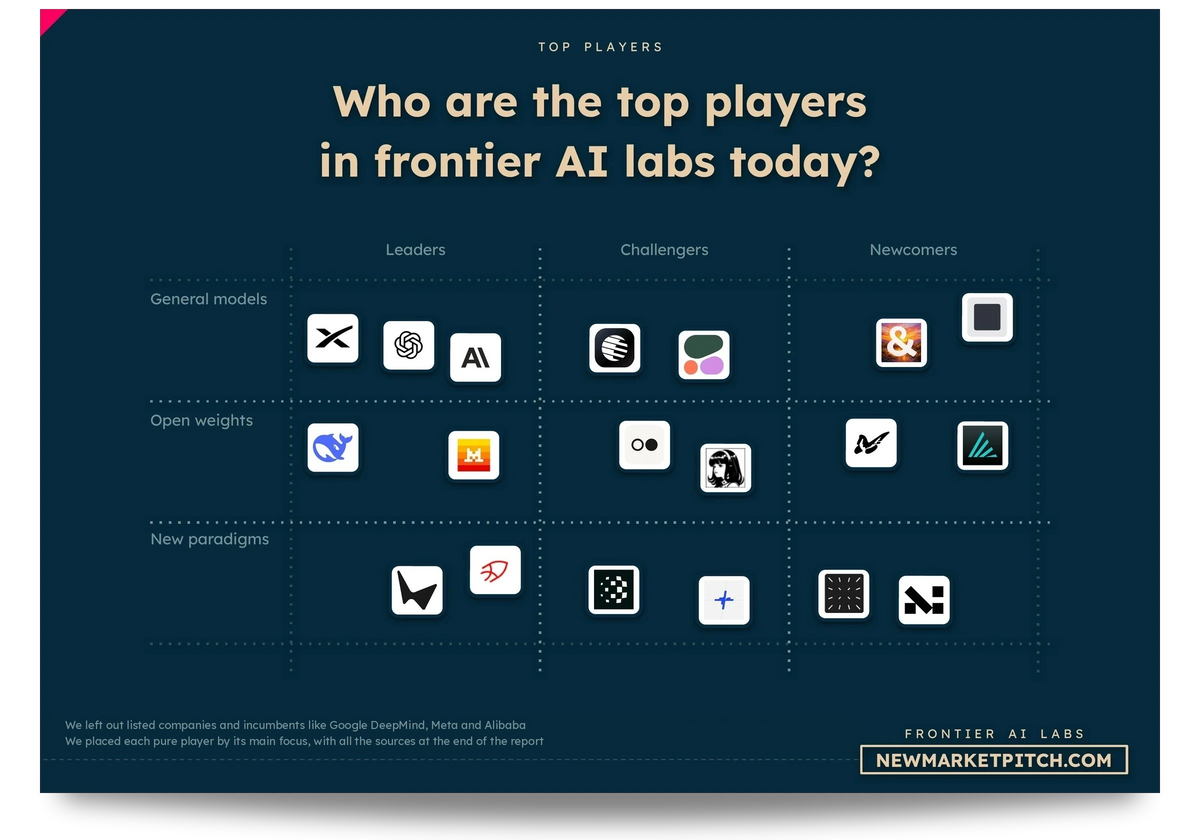
Public investors are also paying much more than Anthropic's last private buyers. The May 2026 round valued the company at $965 billion, so the new range represents an increase of roughly 31% to 46% in about six months. Earlier talk around $2 trillion has already disappeared, which tells us buyers have started pushing back before the shares even trade. We compare what each frontier lab was worth then and what it is worth now in our report on what frontier AI labs are worth.
Goldman's roadshow forecasts make the remaining bet unusually clear. According to the Financial Times, the bank expects Anthropic to reach about $136 billion of revenue in 2027 and more than $600 billion by 2030, but still burn cash until 2030. A valuation near the top of the range therefore asks investors to believe both sides at once: revenue keeps exploding, and the huge compute bill eventually turns into durable profit.
That leaves us with a fairly narrow conclusion. Around $1.2 trillion to $1.3 trillion, Anthropic is expensive but the price still connects to the size and speed of the business today. Near the top of the range, the margin for error gets thin. Claude can grow more slowly than it has and still become enormous, but this IPO price does not leave much room for slower usage, falling AI prices or another jump in compute costs.

Written by the New Market Pitch teamWe track new markets so founders and investors can move faster. About us


This is just a preview page. Don’t worry if a number looks old: the report gets refreshed, and you’ll always get the latest version.
What price is Anthropic asking for in its IPO?
Anthropic is asking investors for a valuation of roughly $1.26 trillion to $1.41 trillion, after months of price talk that moved a lot.
Anthropic's latest S-1 puts the estimated share price at $70 to $78, which the Financial Times says corresponds to that range. Earlier discussions had gone as high as about $2 trillion, while Bloomberg later reported that some prospective buyers were talking about $1.1 trillion to $1.3 trillion after the technology selloff.
The business changed quickly while those prices moved around. Anthropic's revenue for the first nine months of 2026 was more than 13 times the same period a year earlier, and the company says its annualized revenue run rate reached about $81 billion by the end of October. At the latest valuation range, that works out to roughly 15.6 to 17.4 times the current run rate.
That leaves IPO buyers weighing a demanding multiple, for a company with heavy infrastructure costs and uneven GAAP profitability, against a business that has grown far faster than anyone expected when the price talk was higher.
At about 16 to 17 times its run rate, Anthropic is pricier than most of the giant tech listings, like Alibaba, Arm, Google or Uber, which went out at 7 to 20 times revenue. It still sits well below the richest ones, like Snowflake, Cerebras, SpaceX and Coinbase, which priced at 50 to 125 times. Those rich multiples ended up all over the place a year later: Snowflake was up about 170%, while Coinbase and Facebook were down by a third or more, and Cerebras, the other big AI listing this year, already trades about half below its IPO price.
The table below shows Anthropic's expected IPO valuation next to the biggest and most watched tech listings of the last 20 years, with the revenue multiple each one paid and how the stock did a year later.
| Company | Listing year | Valuation at IPO price | Revenue multiple at IPO | Return a year later |
|---|---|---|---|---|
| SpaceX | 2026 | $1.77T | ~95x | too early |
| Anthropic (expected) | 2026 | ~$1.3T-$1.4T | ~16-17x run rate | not listed yet |
| Alibaba | 2014 | $168B | ~20x | -3% |
| 2012 | $104B | ~28x | -31% | |
| Uber | 2019 | $82B | ~7x | -31% |
| Rivian | 2021 | $66.5B | no revenue yet | -64% |
| Coinbase (direct listing) | 2021 | $65B | ~51x | -38% |
| Cerebras | 2026 | $56B | ~111x | too early |
| Arm | 2023 | $54.5B | ~20x | +173% |
| Airbnb | 2020 | $47B | ~10x | +167% |
| Snowflake | 2020 | $33B | ~125x | +170% |
| 2004 | $23B | ~16x | +230% | |
| CoreWeave | 2025 | $23B | ~12x | +101% |
| Figma | 2025 | $19.3B | ~26x | -28% |
| Klarna | 2025 | $15.1B | ~5x | -65% |
| Circle | 2025 | ~$8B | ~5x | +192% |
| 2024 | $6.4B | ~8x | +220% |
The multiple divides the valuation at the IPO price by revenue for the last full fiscal year before listing (Coinbase at its $250 reference price), except for Anthropic, which uses its annualized run rate, a forward-looking figure that makes its multiple look lower than a trailing one would; the one-year return runs from the IPO price to the close about 12 months after the first trading day, adjusted for splits.
How fast is Anthropic growing right now?
Anthropic is growing extraordinarily fast: revenue jumped from $2.5 billion to $33.2 billion across the first nine months of 2025 and 2026.
That is about 1,206% year-over-year growth. The longer history is just as striking. Anthropic reported $41 million of revenue in 2023, $386 million in 2024 and $4.6 billion in 2025.
The pace kept accelerating during 2026. Anthropic says annualized revenue reached about $71 billion at the end of September and about $10 billion more one month later. That jump in the run rate helps explain why investors still accept a trillion-dollar discussion even after the market cut the earlier valuation expectations. Growth this fast is one reason we track who's growing the fastest among the frontier labs in our report on the top frontier AI labs.
The table below shows how quickly Anthropic's revenue base has changed.
| Period | Revenue | Change |
|---|---|---|
| 2023 | $41M | — |
| 2024 | $386M | +841% |
| 2025 | $4.6B | +1,088% |
| 9M 2025 | $2.5B | — |
| 9M 2026 | $33.2B | +1,206% |
| Sep. 2026 run rate | ~$71B | — |
| Oct. 2026 run rate | ~$81B | +$10B in one month |

Is Anthropic already profitable?
No. Anthropic is much closer to operating break-even than it was a year ago, but the Claude business still moves in and out of GAAP profit as compute costs change.
Anthropic reported an operating loss of about $1.3 billion for the first nine months of 2026 on $33.2 billion of revenue. A year earlier, the operating loss over the same period was about $5.2 billion.
The quarterly numbers are less smooth. Anthropic generated about $974 million of operating income in the second quarter, then posted a $567 million operating loss in the third. The company attributes much of that reversal to $5 billion of expensive short-term compute and a $2 billion non-cash donation-matching charge.
Anthropic's adjusted figures look better. It reported $2.5 billion of adjusted operating income in the third quarter, equal to a 15% margin. Public investors still have to price the GAAP losses, but the gap between revenue and recurring operating costs has narrowed dramatically.

This is a preview page. Spotted an outdated number? That’s normal here. The report you get is always the freshest version.
Why does Anthropic's $81 billion revenue run rate matter so much?
Anthropic's October run rate changes the valuation math because the company is now selling at roughly 16 to 17 times its latest revenue pace, not 30 or 40 times.
At the bottom of the IPO range, the multiple is about 15.6 times that run rate. At the top, it is about 17.4 times. Annualizing the first nine months of reported revenue gives only about $44.3 billion, which would make the same valuation look closer to 28 to 32 times revenue.
The run rate deserves caution. Anthropic says the metric can move with seasonality, customer usage and accounts later removed for policy violations. It is also an internal operating measure, while audited annual revenue is a different figure.
Still, using only the nine-month average would miss how sharply the business accelerated during the year. For this IPO, the argument over price depends heavily on whether October's revenue pace is close to the new normal or just an unusually hot month.
Are Claude customers spending more, or is Anthropic just adding new ones?
Both, but existing Claude customers are spending far more: Anthropic reports net revenue retention of about 900% for its qualified customer base.
Under Anthropic's definition, that means the same group of customers was generating roughly nine times as much revenue after expansion, contraction and churn were included. The company calculates the metric internally, so we would not treat it like an audited accounting number, but the customer tiers tell the same story.
Anthropic had more than 950 customers producing at least $100,000 of trailing revenue in September 2025. One year later, it had more than 11,900. More than 1,900 customers were above $1 million, and around 250 were above $10 million.
The table below shows how quickly large Claude accounts multiplied.
| Customer threshold | Earlier figure | Latest figure |
|---|---|---|
| $100K+ trailing revenue | >950 | >11,900 |
| $1M+ trailing revenue | Not disclosed | >1,900 |
| $10M+ trailing revenue | Not disclosed | ~250 |
| Net revenue retention | — | ~900% |
| Consumption share of revenue | — | ~79% |
| Subscription share of revenue | — | ~21% |
| Largest single customer, 9M revenue | — | <10% |

Preview only. Some numbers may have changed since we made this page, but your report will be up to date.
Is Anthropic too dependent on a few giant customers?
No. Anthropic has some very large Claude accounts, but the filing does not show one customer controlling the business.
No single customer contributed more than 10% of Anthropic's revenue in the first nine months of 2026. The company also says the share coming from its five largest customers fell as the year progressed.
That customer spread matters more than the raw count of accounts. Anthropic can have hundreds of customers spending millions while still avoiding the risk that one contract determines an entire quarter. The current filing points to a broad enterprise base growing underneath the headline deals. Customer mix is one clue to which business models are winning, a question we weigh across the biggest labs in our frontier AI labs report.
What does Anthropic actually sell today?
Anthropic now sells far more than access to a chatbot: most revenue comes from companies paying for Claude usage inside software, coding and knowledge-work systems.
Consumption-based products generated about 79% of revenue in the first nine months of 2026. Subscriptions accounted for about 21%. That mix lets Anthropic earn more whenever a customer sends more work through its models instead of waiting for another employee seat to be added.
Claude Code is the clearest example. Anthropic describes it as an agent that can plan, write, test and debug software. Claude Cowork extends the same approach to broader office work, and Anthropic says early Cowork adoption after its research preview ran ahead of Claude Code at the same point after launch.
That mix helps explain the extraordinary customer expansion. Anthropic increasingly gets paid for work flowing through Claude, which can grow much faster than a fixed subscription count when a customer automates more tasks.
Is Anthropic's compute bill getting under control?
Not yet. Anthropic has made its compute spending far more efficient than it was in early 2025, but the third-quarter bill jumped again to $9.9 billion.
Compute and infrastructure expense was $944 million in the first quarter of 2025 and reached $9.9 billion in the third quarter of 2026. Relative to revenue, the picture improved much more: compute fell from 251% of revenue in early 2025 to 48% in the second quarter of 2026, then rose to 58% in the third quarter.
Anthropic says $5 billion of third-quarter spending came from short-term capacity that costs significantly more than comparable long-term compute. In plain terms, Claude demand grew faster than Anthropic's cheaper contracted capacity, so the company paid extra to keep up.
The table below shows the tension between better unit economics and a much larger absolute bill.
| Metric | Latest figure | Context |
|---|---|---|
| 9M revenue | $33.2B | Up sharply year over year |
| 9M operating loss | $1.3B | Much smaller than 2025 |
| Q3 compute expense | $9.9B | Anthropic's biggest operating cost |
| Q3 compute as % of revenue | 58% | Up from 48% in Q2 |
| Q3 short-term compute | $5.0B | Higher-cost emergency capacity |
| Q3 GAAP operating loss | $567M | Reversed Q2 operating profit |
| Q3 adjusted operating income | $2.5B | Positive after adjustments |
| Q3 adjusted operating margin | 15% | Down from 19% in Q2 |

This is just a preview page. Don’t worry if a number looks old: the report gets refreshed, and you’ll always get the latest version.
How scary is Anthropic's $900.9 billion compute commitment?
Very. Anthropic's future compute commitments are manageable only if Claude keeps turning enormous amounts of contracted computing power into revenue.
Anthropic says purchase commitments and leases total about $900.9 billion, with substantially all of them tied to compute and infrastructure. Roughly $451.6 billion is expected before the end of 2030. About $70.7 billion falls in the 12 months after September 2026, while other agreements stretch as far as 2045.
The full commitment equals a little more than 11 times Anthropic's current annualized revenue pace. That comparison is deliberately harsh because the spending will support many years of future business, but it captures the scale of what Anthropic has promised to buy.
Goldman's roadshow model gives the other side of the bet. The Financial Times reports that Goldman expects Anthropic's revenue to exceed $600 billion by 2030. If that forecast gets anywhere close, today's capacity contracts will look very different from how they look against 2026 revenue.
Does Anthropic have enough cash for all that spending?
Yes for the near term. Anthropic has enough liquidity to cover the next year of disclosed commitments, even though the longer infrastructure bill remains enormous.
Before the IPO, Anthropic reported $146.6 billion of liquidity. That included $95.6 billion of cash and cash equivalents, $36.3 billion of short-term investments and $14.8 billion available under its credit facility.
At the midpoint of the offer, Anthropic expects about $84.6 billion of net proceeds from the IPO and concurrent private placement. Added to the pre-IPO liquidity, that would put near-term financial resources above $230 billion before counting any further partner financing. Cash like this has to come from somewhere; see our report covering frontier AI labs for who has raised the most, and from whom.
Those resources cover the next 12 months of disclosed commitments more than three times over. What investors still have to judge is how many additional compute contracts the company signs while trying to keep up with Claude demand.
Is Anthropic being valued like a normal software company?
Far from it. Anthropic's IPO price only works if investors treat Claude as a business that can grow much faster than mature software while carrying far heavier infrastructure costs.
The IPO range against Anthropic's October revenue run rate means roughly 16 to 17 times revenue. Many public software companies would look expensive at that multiple, and they usually do not spend anything close to 58% of revenue on computing infrastructure.
Anthropic's growth is the reason investors tolerate the difference. Microsoft reported $331.8 billion of revenue for fiscal 2026, while Alphabet generated $357.3 billion in the first nine months of 2026. Both companies are far larger and strongly profitable, but neither is multiplying revenue at anything close to Anthropic's current pace.
SpaceX adds a useful public-market warning. Its June IPO priced at $135, and Bloomberg later reported the shares falling below that price. A huge order book can get a company listed, but public trading quickly removes the protection of infrequent private valuations.

Is Anthropic now worth more than OpenAI?
Slightly, if the shares price inside the current range. The two frontier AI labs now sit in roughly the same valuation band.
Bloomberg reported that OpenAI closed the first roughly $11 billion of a financing at a $1.25 trillion valuation after earlier aiming higher. The Financial Times puts Anthropic's current IPO target at roughly $1.26 trillion to $1.41 trillion.
The comparison is imperfect because OpenAI's number comes from a private financing while Anthropic is selling into a public market. Even so, it tells us something useful about the current frontier AI price range: Anthropic is no longer being treated as the much cheaper alternative.
Anthropic also gives buyers more financial detail than a private round normally does. Revenue, operating losses, customer concentration and long-term compute contracts are all in the filing, so public investors can test the valuation with far fewer blanks.
How much higher is Anthropic's IPO price than its last private valuation?
Anthropic's IPO asks investors to pay roughly 31% to 46% more than the $965 billion valuation set in May 2026.
That May financing raised $65 billion. Only about six months later, the IPO range implies another $295 billion to $445 billion of value depending on where the shares price.
Anthropic did grow dramatically during those six months. Its revenue run rate kept climbing into October, customer spending expanded quickly, and the first nine months of 2026 brought the company much closer to operating break-even than a year earlier.
The market has still refused to accept every step up. Earlier talk of a much higher valuation faded, and Bloomberg reported that some investors were discussing prices below the formal range after the selloff. The formal range landed above those bearish conversations but far below the original headline number.
What are banks expecting Anthropic to earn next?
Goldman is modeling another huge jump: about $136 billion of Anthropic revenue in 2027, followed by more than $600 billion by 2030.
The Financial Times says Goldman shared those forecasts with a potential IPO investor. Its model starts from about $52 billion of 2026 revenue and climbs steeply from there.
The cash-flow forecast is much less flattering. Goldman expects free cash flow to stay negative until 2030, with cash outflows reaching about $65.7 billion in 2027. It also expects operating losses to peak around $40.4 billion that year before operating profit turns positive in 2029. A cash burn like this raises the question of which investors will fund it, and we follow the biggest bets in our report on frontier AI lab investors.
Those estimates put the IPO debate in one place. The bet goes far beyond selling more Claude: Anthropic may have to burn tens of billions more while building enough capacity to support hundreds of billions of future revenue.

This is a preview page. Spotted an outdated number? That’s normal here. The report you get is always the freshest version.
What could make Anthropic's IPO price look cheap a year from now?
Anthropic's IPO could look cheap quickly if revenue moves toward Goldman's 2027 forecast while compute falls back toward half of sales or less.
Take a simpler example. If annualized revenue rose from the October pace to $120 billion while the valuation stayed in the middle of the IPO range, the revenue multiple would fall from roughly 16 times to about 11 times. A move toward $136 billion, Goldman's reported 2027 forecast, would push it below 10 times.
Anthropic already has some ingredients for that outcome. More than 11,900 customers now generate at least $100,000 of trailing revenue, existing qualified customers are expanding their spending rapidly, and most revenue moves with usage.
The upside case therefore does not require the current valuation to be cheap. It requires Claude revenue to outrun the price investors are paying today.
What could cut Anthropic's valuation sharply after the IPO?
Slower Claude usage plus stubborn compute costs could hit Anthropic's valuation hard because the current IPO range leaves little room for ordinary growth.
Anthropic itself warns that its recent growth reflects early adoption and should not be expected to continue at the same rate. The company also says price reductions and contractual discounts reduced third-quarter revenue by about $600 million compared with what usage growth alone would have produced.
Compute is the bigger financial risk. Third-quarter compute expense rose again as a share of revenue, Anthropic had to buy costly short-term capacity, and the company has hundreds of billions of dollars of future infrastructure commitments.
A price war would squeeze both sides at once. Cheaper models from OpenAI, Google, open-source developers or other AI labs could push Claude pricing down while Anthropic still has to pay for infrastructure contracted years in advance. Public investors can reprice that combination immediately.
Is Anthropic's IPO price too high in the end?
Yes near $1.4 trillion; much less clearly around $1.2 trillion to $1.3 trillion. Anthropic has built enough real revenue to support a trillion-dollar valuation, but the top of the IPO range already assumes that today's exceptional growth survives a very expensive build-out.
At $1.2 trillion, Anthropic would trade at about 14.8 times its October run rate. In the middle of the IPO range, the multiple is about 16 times. Near the top, it reaches about 17.4 times.
The lower numbers are easier to defend because Anthropic already has a nine-month revenue base far above any earlier full year, thousands of large customers and a revenue pace that kept rising into October. The upper end asks investors to absorb all of that plus an uneven profit record, a heavy quarterly compute bill and hundreds of billions of dollars of long-term infrastructure commitments.
Goldman's forecasts explain why some investors will still pay up. If Anthropic gets close to those Goldman targets for 2027 and 2030, today's valuation multiple collapses quickly. The same model expects years of heavy cash burn first, which is exactly why the entry price matters so much.
We would treat a price at or just below the bottom of the range as aggressive but defendable on the information available now. Once the price gets close to the top of the range, Anthropic starts charging investors today for a large part of the growth it still has to deliver.
The table below shows what different Anthropic valuations imply using the latest reported revenue run rate.
| Valuation | Multiple on ~$81B run-rate revenue | Our read |
|---|---|---|
| $1.0T | 12.3x | Clear discount to current range |
| $1.1T | 13.6x | Below formal range |
| $1.2T | 14.8x | Aggressive but easier to defend |
| $1.26T | 15.6x | Latest reported low target |
| $1.30T | 16.0x | Still tied to current growth |
| $1.40T | 17.3x | Very little room for a slowdown |
| $1.41T | 17.4x | Latest reported high target |
| $1.50T | 18.5x | Earlier expectation |
| $2.0T | 24.7x | Earlier headline talk |
Multiples use Anthropic's approximately $81 billion October 2026 run-rate revenue, which is not audited annual revenue.

Preview only. Some numbers may have changed since we made this page, but your report will be up to date.
Our methodology
We built this analysis around Anthropic's latest amended S-1 and the newest roadshow reporting. Earlier private-market discussion around a $1.5 trillion to $2 trillion valuation is useful only as historical context. The filing is our main source for revenue, operating expenses, customer counts, net revenue retention, compute commitments, liquidity, offering proceeds and the $70 to $78 share-price range. The Financial Times and Bloomberg provide the valuation attached to that range, the earlier investor discussions and the latest bank forecasts shown to prospective buyers.
For valuation multiples, we divided each reported valuation by Anthropic's October revenue run rate. We also checked those results against annualized nine-month revenue so one internal metric does not carry the whole conclusion. Anthropic says run-rate revenue can change with seasonality, usage patterns and accounts later removed for policy violations, so we use it as the current sales pace and keep it separate from audited annual revenue.
We kept GAAP operating results separate from Anthropic's adjusted operating figures. When we say whether the company is profitable, we use the filing's GAAP numbers. We use adjusted operating income only where it helps explain how the underlying cost structure changed during a quarter affected by short-term compute and non-cash charges.
We treat Anthropic's purchase commitments and leases as spending spread over many years, not as debt due immediately. We separately compare the amount due over the following 12 months with current liquidity and expected IPO proceeds. We do not add unrelated financial measures or treat financing capacity that has not been drawn as cash already received.
For OpenAI, SpaceX and large listed technology companies, we use company filings and first-rank reporting. Their valuations are not perfectly comparable: a private financing, an IPO valuation and a public market capitalization work differently. We use those comparisons only to test how far Anthropic's current price sits from the values investors are assigning to other major AI and technology businesses.
We also added Goldman's latest roadshow forecasts because they directly test the valuation question. Those numbers are forecasts, not Anthropic guidance, so we use them to understand what a bullish underwriting case requires and keep them separate from future facts. The research runs through November 11, 2026. Anthropic's final IPO price has not yet been set, so the exact valuation can still move before trading begins.
Key primary sources include Anthropic's latest IPO filing and its first amended filing.
Written by the New Market Pitch teamWe track new markets so founders and investors can move faster. About us