
Which top AI protein design startups have drugs in trials?
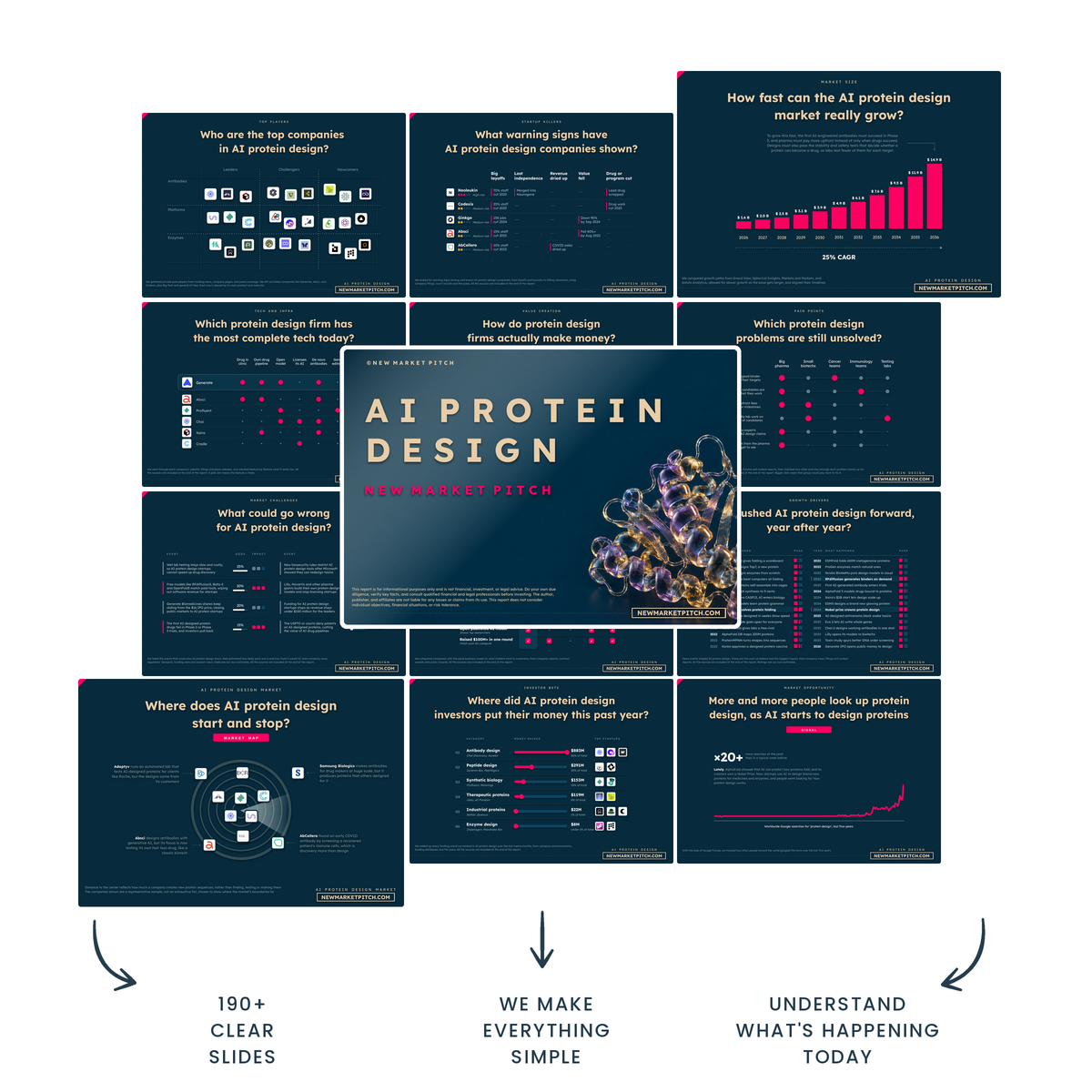
Whether you're building or investing in the AI protein design market, our report covers everything you need to know: the players, the money, and what's coming next.
Summary
Generate:Biomedicines, Absci, BigHat Biosciences and iBio are the leading AI protein design startups with identifiable drugs that have reached human trials. Generate is furthest ahead, with its AI-engineered asthma antibody GB-0895 already in Phase 3.
The clinical pipeline is still surprisingly concentrated. Across these four companies, we identified eight distinct candidates that have reached human testing, but that includes completed studies and programs no longer being advanced internally. Only one candidate has reached Phase 3.
Generate has a bigger lead than its Phase 3 designation alone suggests. Its clinical portfolio spans severe asthma, oncology supportive care and an engineered CAR T-cell therapy for ovarian cancer, demonstrating that its protein engineering approach can support different therapeutic applications.
GB-0895 is the industry's most important near-term clinical test. Its approximately 98-day antibody half-life supports a proposed six-month dosing interval, compared with injections every four weeks for the approved TSLP-targeting treatment tezepelumab. Two Phase 3 trials involving approximately 1,600 patients will determine whether that convenience comes with sufficient efficacy.
Absci has demonstrated repeatability by bringing two AI-engineered antibodies into human studies. But it chose not to finance further internal development of ABS-101, concentrating instead on ABS-201 for hair loss. The latter has shown an estimated half-life of at least 65 days, although meaningful hair-regrowth results remain the decisive test.
BigHat Biosciences and iBio crossed the first-in-human threshold in 2026. BigHat is testing BHB810, an antibody-drug conjugate for gastrointestinal cancers, while iBio's IBIO-600 targets muscle preservation in obesity. Both have promising development rationales, but their efficacy evidence remains predominantly preclinical.
Longer-lasting antibodies are emerging as a recurring advantage sought through AI-assisted design. Yet favorable pharmacokinetics, biomarker changes and promising animal experiments do not establish that the resulting drugs improve patient outcomes or outperform conventionally engineered medicines.
Chai Discovery and Cradle represent another commercially important segment. Their pharmaceutical partnerships suggest that AI protein engineering is gaining traction inside drug discovery workflows, even though neither has a publicly identified proprietary therapeutic in human trials in this comparison.
AI also appears capable of accelerating selected engineering tasks. iBio reported reaching first human dosing roughly two years after initiating IBIO-600, and Cradle reports substantial workflow improvements. There is still insufficient comparative evidence to conclude that AI consistently shortens the full drug development and approval process.
Generate is the strongest candidate to secure the first approval among these companies, helped by its advanced trial program and a therapeutic target already validated by an approved medicine. The broader industry has proved that AI-designed proteins can enter the clinic; repeated demonstrations of meaningful patient benefit are still ahead.

Written by the New Market Pitch teamWe track new markets so founders and investors can move faster. About us

In our report covering the AI protein design market, we turn what is vague and complex into simple, useful visuals. Market maps like this one show you at a glance where every startup stands.
Have AI protein design startups finally reached human trials?
Yes. Several AI protein design startups now have experimental medicines being tested in humans, and Generate:Biomedicines has already reached Phase 3 with an AI-engineered antibody for severe asthma.
The field has moved well beyond generating promising protein sequences on computers. Generate, Absci, BigHat Biosciences and iBio have all brought identifiable AI-engineered therapeutics into human testing. Their programs cover asthma, hair loss, gastrointestinal cancers, obesity and other conditions.
The difference between these companies is already substantial. Generate is running large Phase 3 asthma trials, Absci has reported early human safety and pharmacokinetic data, while BigHat and iBio only recently administered their first clinical doses.
There is also a distinction between designing a medicine and helping another company design one. Chai Discovery and Cradle have secured important pharmaceutical partnerships, but their publicly disclosed clinical evidence is harder to connect to specific AI-designed drugs.
For this comparison, we count companies whose AI technology played a meaningful role in engineering a therapeutic protein that has reached human testing. We also distinguish ongoing studies from completed first-in-human programs. That gives us a clearer answer than ranking companies by funding, model performance or the number of pharmaceutical partnerships they have announced.
Which AI protein design startups actually have drugs in clinical trials?
Generate:Biomedicines, Absci, BigHat Biosciences and iBio are the clearest examples of AI protein design companies with identifiable drug candidates that have reached human trials.
Generate has the broadest clinical record in this group. Its pipeline includes GB-0895 for severe asthma, GB-4362 for reducing toxic effects associated with certain cancer treatments, and GB-5267, an engineered CAR T-cell therapy for ovarian cancer. The company also completed first-in-human research with its coronavirus antibody GB-0669.
Absci has brought ABS-101 and ABS-201 into human studies. BigHat entered clinical development with BHB810 for gastrointestinal cancers, and iBio followed with IBIO-600 for obesity-related muscle preservation.
Across these four companies, we identified at least eight distinct candidates that have reached human clinical evaluation. That count includes completed first-in-human research and programs that companies have since chosen not to advance internally. It should therefore not be read as eight actively recruiting trials.
| Company | AI-designed candidate | Therapeutic area | Clinical position |
|---|---|---|---|
| Generate:Biomedicines | GB-0895 | Severe asthma | Phase 3 |
| Generate:Biomedicines | GB-4362 | Oncology supportive treatment | Phase 1 |
| Generate:Biomedicines | GB-5267 | Ovarian cancer | Phase 1, first patient treated |
| Generate:Biomedicines | GB-0669 | Coronavirus infection | First-in-human study completed |
| Absci | ABS-201 | Pattern hair loss | Phase 1/2a |
| Absci | ABS-101 | Inflammatory bowel disease | Phase 1 results reported; internal later-stage development not pursued |
| BigHat Biosciences | BHB810 | Gastrointestinal cancers | Phase 1, first patient treated |
| iBio | IBIO-600 | Obesity and muscle preservation | Phase 1 |

Our research about AI protein design gets updated several times a month, so you always get the latest view of where things stand.
Is Generate:Biomedicines the clear leader in clinical AI protein design?
Generate:Biomedicines currently has the strongest clinical pipeline among AI protein design startups, and its lead is bigger than a simple Phase 3 designation suggests.
The company's most advanced candidate, GB-0895, is an AI-engineered antibody targeting thymic stromal lymphopoietin, or TSLP, a protein involved in airway inflammation. The goal is to control severe asthma with injections approximately every six months.
Generate's Phase 1 asthma study involved 96 participants and reported an antibody half-life of approximately 98 days, with sustained effects on inflammatory biomarkers. Those results supported the launch of SOLAIRIA-1 and SOLAIRIA-2, two Phase 3 studies designed to evaluate approximately 1,600 patients over 52 weeks.
But Generate's clinical activity goes considerably further. GB-0895 is also being studied in chronic obstructive pulmonary disease, while GB-4362 entered clinical development to investigate whether an engineered antibody can neutralize free MMAE, a toxic payload used in some cancer medicines.
Then, on October 1, 2026, Generate and Roswell Park Comprehensive Cancer Center announced that the first patient had received GB-5267, an AI-engineered CAR T-cell therapy for ovarian cancer. That adds an entirely different kind of treatment to its clinical portfolio.
Generate has now advanced several therapeutic approaches into humans rather than relying entirely on one promising asthma antibody.
Its biggest unanswered question is whether GB-0895 can deliver the clinical benefit needed for approval. But no other company in this comparison has a similarly advanced combination of pivotal trials, human pharmacology data and clinical pipeline breadth.
If you want more recent data on this point, please see our latest AI protein design market report.
Does Absci really have two AI-designed drugs in humans?
Absci has brought two AI-engineered antibodies into clinical testing, although the company is now concentrating most of its development efforts on ABS-201.
ABS-101, an antibody targeting TL1A for inflammatory bowel disease, entered Phase 1 testing in May 2025. In November 2025, Absci reported early data showing a longer half-life than first-generation anti-TL1A competitors and no serious adverse events. However, the company also announced that it would not independently initiate further later-stage development of ABS-101, instead exploring partnership or licensing opportunities.
That decision is important when judging the pipeline. Absci demonstrated that it could bring an AI-designed antibody into humans, but the company did not continue financing both clinical programs equally.
Its main focus became ABS-201, an antibody targeting the prolactin receptor for pattern hair loss. The HEADLINE Phase 1/2a trial began in December 2025. By June 2026, Absci had reported interim safety data from 32 participants across four single-ascending-dose cohorts, with an estimated antibody half-life of at least 65 days.
The company subsequently moved into multiple-ascending-dose testing in participants with androgenetic alopecia. It is also exploring the same prolactin receptor mechanism for endometriosis.
Absci's record gives us more confidence in its ability to repeatedly design antibodies suitable for clinical development. Yet the shift away from internal ABS-101 development shows that reaching Phase 1 does not guarantee a candidate will remain worth financing. The next important evidence is whether ABS-201 actually produces meaningful hair regrowth.

In our market report about AI protein design, we look at what the winners do differently, so you can learn from the best instead of guessing.
Has BigHat Biosciences already put an AI-designed cancer drug into patients?
BigHat Biosciences has entered human testing with BHB810, an AI-engineered antibody-drug conjugate for gastric cancer and other advanced gastrointestinal tumors.
The company announced its first patient dosing on September 1, 2026. BHB810 targets CDH17, a protein found in certain gastrointestinal cancers, and combines an engineered antibody structure with a cancer-killing drug payload.
BigHat used its Milliner platform to design and experimentally test antibody properties including binding, stability and manufacturability. The platform brings computational modeling together with automated laboratory work, allowing the company to repeatedly compare predicted properties against measured results.
The preclinical findings are worth examining. At the American Association for Cancer Research meeting in 2026, BigHat reported complete or near-complete tumor clearance across 13 patient-derived gastric cancer models. The company also reported favorable stability compared with a benchmark clinical-stage antibody-drug conjugate.
Those animal-model results helped justify the move into human testing, although tumor clearance in preclinical models cannot tell us whether patients will respond similarly.
BigHat has since raised $75 million in Series C funding, bringing its total financing to $223 million. The round was co-led by DFJ Growth and Premji Invest and included investors with substantial biotechnology experience.
For BigHat, the next meaningful evidence will come from human safety, dose-escalation and tumor-response data. Its platform has produced a clinical candidate; whether that candidate works well enough to become a medicine is still an open question.
Can iBio's AI-designed antibody make obesity treatment better?
iBio has entered human trials with IBIO-600, an AI-engineered antibody designed to preserve muscle and improve body composition in people with obesity.
The company dosed its first Phase 1 participant in June 2026. IBIO-600 targets myostatin and GDF11, proteins involved in regulating muscle growth. Its potential role is particularly interesting because treatments that produce substantial weight loss can also reduce lean body mass.
Rather than developing another appetite-suppressing medicine, iBio wants to address the muscle-loss side of obesity treatment. This could eventually make IBIO-600 useful alongside GLP-1 drugs, although clinical studies still need to establish that benefit.
According to iBio's fiscal 2026 disclosures, 31 participants had received IBIO-600 across four single-ascending-dose cohorts, with no reported safety finding that would prevent further dose escalation. The company was preparing for multiple-ascending-dose testing.
The broader pipeline adds context. iBio is developing IBIO-610, an antibody targeting Activin E, and IBIO-800, a bispecific antibody targeting myostatin and Activin A. Both remained preclinical in the latest disclosed pipeline update.
IBIO-600 reached its first human dose approximately two years after program initiation, according to the company. That is an encouraging development timeline, but iBio still needs clinical evidence showing improvements in muscle preservation, body composition or physical function.
For now, iBio is a serious early-stage contender rather than a proven obesity-drug competitor.

In our document detailing everything you need to know about AI protein design, you will always find fresh funding data, taken straight from our own verified funding database.
Do AI-designed protein drugs actually work in humans yet?
Generate's GB-0895 has produced the strongest disclosed human pharmacology evidence among the leading AI protein design startups reviewed, but none of these companies has yet demonstrated broad clinical superiority over established treatments.
In Generate's Phase 1 asthma study, GB-0895 remained in the bloodstream for an extended period and reduced several inflammatory markers. Its approximately 98-day half-life supports the proposed six-month dosing interval. The company also reported effects on blood eosinophils, FeNO, IL-5 and IL-13.
These measurements are useful because they show that the antibody affected biological pathways associated with inflammation.
Absci's ABS-201 has also produced encouraging pharmacokinetic data. Its estimated half-life of at least 65 days suggests that a hair-loss treatment could potentially be administered only two or three times over six months. However, the disclosed interim results were primarily about safety and how the drug behaves in the body, with clinically meaningful hair-regrowth results still pending.
BigHat's BHB810 and iBio's IBIO-600 are earlier in their clinical testing. Their strongest publicly described efficacy evidence remains preclinical, while the initial human studies concentrate on safety, tolerability and dose selection.
The difference between these stages is large. A medicine can remain in the bloodstream for months and affect its intended biological target without necessarily improving the patient's condition.
So far, AI-designed antibodies have demonstrated human biological activity and encouraging early safety profiles. Convincing therapeutic efficacy is the next major threshold, and it is a much tougher one.
If you want more recent data on this point, please see our latest AI protein design market report.
Are AI-designed antibodies already better than conventional drugs?
AI-designed antibodies have shown promising properties, particularly longer duration of action, but there is currently no strong clinical evidence that AI protein design consistently produces better medicines than traditional development methods.
Generate's GB-0895 is a useful example. Its proposed six-month dosing interval would be substantially less frequent than the every-four-week schedule of AstraZeneca and Amgen's tezepelumab, an approved antibody targeting the same TSLP pathway.
That could be a genuine advantage for patients with severe asthma, especially those who find frequent injections inconvenient. Yet GB-0895 still needs to demonstrate effective prevention of asthma exacerbations in Phase 3.
Absci is pursuing something similar with ABS-201. Its long half-life could make hair-loss treatment much less frequent than daily topical or oral medications. What remains unknown is whether the antibody produces enough hair regrowth to justify an injectable biologic treatment.
BigHat is approaching the problem differently. Its cancer antibody was engineered around properties such as drug delivery, tumor targeting and stability, with preclinical experiments suggesting favorable performance. Human oncology studies will determine whether these features lead to better outcomes.
Importantly, antibody engineering, half-life extension and automated laboratory screening all existed before modern generative AI models. We cannot attribute every favorable molecule property exclusively to AI.
The technology has shown that it can help engineers create drug candidates with specific desired characteristics. There is still no reliable clinical evidence that AI-designed molecules outperform conventional drugs as a group.

Learning from others' mistakes is the cheapest lesson there is. In our report covering the AI protein design market, we look at what broke startups before you, so you don't repeat it.
Does Generate's Phase 3 asthma trial prove that AI protein design works?
Generate's Phase 3 program is strong evidence that AI-assisted protein engineering can produce a serious drug candidate, but the technology still needs to prove it can deliver better treatment outcomes.
The two SOLAIRIA studies are designed to test GB-0895 in approximately 1,600 patients whose severe asthma remains inadequately controlled. The primary endpoint is the annualized rate of asthma exacerbations over 52 weeks.
The clinical design is important. Generate is moving from early measurements of drug exposure and inflammatory biomarkers toward a direct test of how frequently patients experience serious asthma attacks.
There is also a significant financial commitment behind this decision. In its second-quarter 2026 results, Generate reported approximately $457.4 million in cash, cash equivalents and marketable securities, with quarterly research and development expenses of $64.3 million.
That level of spending reflects the expensive transition from protein discovery into large-scale human testing. The company's clinical program now depends heavily on patient recruitment, trial execution, manufacturing consistency and regulatory approval.
The advantage of targeting TSLP is that the pathway already has clinical validation through tezepelumab. Generate can concentrate on demonstrating its proposed improvements in dosing convenience and therapeutic performance.
Still, Phase 3 remains a major hurdle. GB-0895's success would be a meaningful achievement for AI-engineered therapeutics, but it would not by itself establish that AI improves drug discovery success rates across the industry.
If you want more recent data on this point, please see our latest AI protein design market report.
Why is Chai Discovery attracting big pharma without its own clinical-stage drugs?
Chai Discovery has become a major AI protein design company by selling its technology to pharmaceutical developers rather than building its position around a publicly identified proprietary clinical-stage drug.
The company announced a $400 million Series C financing in July 2026 and has disclosed agreements with Pfizer, Novartis, argenx and Bristol Myers Squibb.
The concentration of partnerships is notable. Several major pharmaceutical companies committed to working with Chai within a relatively short period, suggesting that its protein design technology has become attractive across different therapeutic research programs.
Its Chai-3 model is designed to generate molecules and support antibody discovery, giving pharmaceutical researchers another way to explore binding properties and molecular structures.
Chai's strategy is less capital-intensive on the clinical side than developing every therapy internally. Pharmaceutical partners can take responsibility for manufacturing, regulatory submissions and clinical trials while using Chai's technology during discovery.
But there is a limit to what we can conclude from these agreements. The public announcements do not establish that a specific Chai-designed molecule has already reached human testing.
Chai could become one of the most commercially successful companies in AI protein design without owning an approved medicine. Its current strength is pharmaceutical adoption, while Generate and Absci have stronger evidence of proprietary clinical development.

Your time is limited. In our research about AI protein design, we put numbers on each part of the market, so you can see where it makes sense to focus.
Can Cradle become a major AI protein design startup without developing drugs?
Cradle could become a major protein engineering software provider without putting its own medicines into clinical trials, because pharmaceutical and biotechnology companies can use its platform to improve their molecules.
The company focuses on helping scientists optimize properties such as protein stability, binding, specificity and manufacturability. It combines machine learning with experimental data so researchers can generate and test better protein sequences.
In January 2026, Cradle announced a three-year agreement with Bayer to support therapeutic antibody discovery and optimization. Hansa Biopharma also announced a collaboration in October 2026 to use Cradle's technology for immunomodulatory therapeutics.
Cradle reports that customers have achieved workflow improvements of two to twelve times across more than 50 protein engineering programs. These are company-reported engineering outcomes rather than independently established reductions in the time required to approve a drug.
Its commercial opportunity is different from Generate's. Cradle can generate revenue from multiple customers without financing their entire clinical development programs, although its success depends on those customers continuing to find the software useful.
The same distinction applies to other AI antibody platforms, including Antiverse and LabGenius.
| Company | Main approach | Publicly identified proprietary drug in human trials? |
|---|---|---|
| Generate:Biomedicines | AI-designed therapeutic development | Yes |
| Absci | Generative antibody discovery and drug development | Yes |
| BigHat Biosciences | AI and automated antibody engineering | Yes |
| iBio | AI-designed therapeutic antibodies | Yes |
| Chai Discovery | Foundation models and pharmaceutical partnerships | Not established |
| Cradle | Protein engineering software | Not established |
| Antiverse | AI-assisted antibody discovery | Not established |
| LabGenius | Automated antibody discovery and optimization | Not established |
Are AI protein design startups moving beyond antibodies?
Generate:Biomedicines is already testing AI-engineered cell therapies alongside antibodies, although antibodies remain the most established clinical application among the startups we reviewed.
Most clinical candidates in this comparison are conventional or modified antibodies. Generate's GB-0895, Absci's ABS-201 and iBio's IBIO-600 are monoclonal antibodies, while BigHat's BHB810 combines an engineered antibody with a cytotoxic drug.
Generate's GB-4362 extends the range of antibody applications. The treatment is designed to neutralize free MMAE, a toxic drug payload that can contribute to peripheral neuropathy when released from certain antibody-drug conjugates.
The most interesting recent step is GB-5267, an engineered CAR T-cell therapy developed with Roswell Park Comprehensive Cancer Center. Its first patient was treated in October 2026 in a Phase 1 trial for recurrent or treatment-resistant ovarian cancer.
The treatment targets MUC16, a protein expressed in more than 80% of ovarian tumors according to the collaborating institutions. Its engineered T cells were designed to improve tumor-killing activity, expansion and persistence inside difficult solid-tumor environments.
The clinical study will also investigate an approach that avoids the chemotherapy often given before CAR T-cell treatment to reduce the patient's existing immune cells.
This program shows how protein engineering can influence cellular therapies. Whether its computationally optimized design helps overcome the long-standing difficulty of treating solid tumors with CAR T cells remains an open question.

In our market report about AI protein design, we always try to gather several sources and make estimates that make sense, so you can work with solid numbers.
Can AI protein design startups actually develop medicines faster?
AI protein design appears capable of reducing the time spent discovering and optimizing proteins, but we still cannot show a consistent reduction in the total time needed to bring a medicine to market.
iBio reported taking IBIO-600 from program initiation to first human dosing in approximately two years. Absci also advanced its internal antibody programs into human studies within relatively short development periods.
BigHat's Milliner platform offers another approach. By combining computational predictions with automated laboratory experimentation, the company can generate new training data and evaluate antibody designs more efficiently.
Cradle's reported workflow improvements support the same general observation: certain protein engineering tasks can now be completed substantially faster.
The problem is that discovery represents only one part of drug development. A company still needs to demonstrate acceptable toxicology, manufacture clinical-grade material, complete regulatory submissions and recruit patients for human studies.
Clinical trials also follow timelines that AI protein models cannot simply eliminate. Generate's Phase 3 asthma studies, for example, assess patients over 52 weeks because researchers need enough time to measure asthma exacerbations.
There is also a missing comparison. Companies frequently announce how quickly successful candidates reached trials, while providing much less information about unsuccessful designs and programs abandoned before clinical development.
Without those failures and comparable historical baselines, we cannot calculate whether AI consistently improves the percentage of drug candidates reaching approval.
The evidence supports faster work in selected protein engineering steps. Claims that AI has dramatically shortened the entire drug development process are still ahead of the data.
Which AI protein design startup is most likely to get a drug approved first?
Generate:Biomedicines is currently the best-positioned company in this group to secure the first approval for one of its AI-engineered therapeutic candidates.
Its GB-0895 program has a major head start. While Absci, BigHat and iBio are collecting early human data, Generate is testing whether its antibody reduces clinically significant asthma attacks in large Phase 3 studies.
That puts Generate several clinical development steps ahead of its closest competitors, although approval still depends on the results.
There is another reason GB-0895 looks promising. Its target, TSLP, is already clinically validated, and an approved therapy using the same mechanism exists. Generate therefore does not need to prove that inhibiting TSLP can treat severe asthma from scratch.
What it must demonstrate is that its own antibody delivers an acceptable combination of efficacy, safety and convenience.
The commercial hurdle is separate. If approved, GB-0895 would compete against existing asthma biologics, including tezepelumab. Twice-yearly injections could be attractive, but physicians and insurers will also evaluate clinical results and cost.
Absci's ABS-201 has a potentially differentiated treatment schedule for hair loss, while BigHat and iBio are developing products in large therapeutic markets. However, their programs still have more clinical stages to complete.
Generate is clearly ahead in the race toward approval. Assigning a numerical probability to that advantage would suggest more precision than the available clinical evidence supports.
If you want more recent data on this point, please see our latest AI protein design market report.

If you build or invest in the AI protein design market, you need to know which business models pay off now and which ones are fading. That's why our report covering it has a whole section on it.
Which AI protein design startups deserve the closest attention now?
Generate:Biomedicines and Absci remain the two most important clinical AI protein design companies to follow, with BigHat Biosciences and iBio forming the next group of emerging challengers.
Generate has already demonstrated that its technology can contribute to several different clinical therapeutic programs. Its next defining milestone is the Phase 3 asthma result, which could move the company from promising clinical development toward a potential approved treatment.
Absci's next major test is more immediate: whether ABS-201 produces meaningful hair regrowth in humans. The company's early safety and pharmacokinetic findings are encouraging, but the expected efficacy readouts will be considerably more informative.
BigHat's first oncology patients will provide early evidence on whether the design characteristics of BHB810 translate into acceptable safety and antitumor activity. Meanwhile, iBio's IBIO-600 study will begin establishing whether its muscle-preservation approach produces useful biological effects in people with obesity.
Chai Discovery and Cradle deserve attention for different reasons. Their pharmaceutical relationships show that AI protein design tools are gaining traction among established drug developers, even without publicly identified proprietary clinical candidates.
One pattern stands out across the group. We identified eight clinical-stage or previously human-tested candidates among four prominent proprietary developers, but only Generate has reached Phase 3. Most of the remaining programs are still in early clinical development.
The field is more advanced than the usual AI discovery demonstrations suggest, although the number of drugs with convincing human efficacy evidence remains small.
Final verdict: Which top AI protein design startups have drugs in trials?
Generate:Biomedicines, Absci, BigHat Biosciences and iBio are the leading AI protein design startups with identifiable therapeutics that have reached human clinical testing. Generate is clearly ahead, Absci is its strongest clinical challenger, and BigHat and iBio are the newer names worth following.
Generate's leadership rests on concrete achievements: pivotal Phase 3 asthma trials, several distinct clinical programs and an expanding range of therapeutic approaches that now includes an AI-engineered CAR T-cell therapy.
Absci has also shown that its platform can produce multiple antibodies suitable for human testing. Its future position depends heavily on the clinical performance of ABS-201, particularly whether the treatment delivers meaningful hair regrowth with infrequent dosing.
BigHat and iBio have reached the first-in-human milestone, although neither has yet produced the clinical efficacy evidence needed to challenge Generate's lead.
Chai Discovery and Cradle belong among the important AI protein design companies, but their commercial success is currently better demonstrated through pharmaceutical partnerships and platform adoption than through publicly identified clinical-stage drugs of their own.
The strongest broader finding is the concentration of progress. Among the eight candidates we identified, only one has reached Phase 3, and most of the remaining human evidence comes from early safety or pharmacokinetic studies.
AI protein design has now produced real clinical candidates across several therapeutic areas. What we have yet to see is a company repeatedly turning those designs into medicines with convincing patient benefits.
Generate has the best chance of getting there first.
If you want more recent data on this point, please see our latest AI protein design market report.

In our report covering the AI protein design market, we don't want to repeat what boring consulting reports say. Instead, we show you the real and latest market signals that matter.
Our methodology
This analysis examines which AI protein design startups have translated their technology into identifiable drug candidates tested in humans. We compared Generate:Biomedicines, Absci, BigHat Biosciences and iBio using clinical advancement, pipeline breadth, human pharmacology and efficacy evidence, therapeutic differentiation and proximity to regulatory milestones. Chai Discovery, Cradle and other platform providers were assessed separately through their disclosed pharmaceutical collaborations.
Our selection covers companies whose AI systems played a meaningful role in engineering therapeutic proteins that reached human clinical evaluation. We included both active trials and completed first-in-human studies, while distinguishing candidates whose developers chose not to pursue further internal development. We did not treat a research partnership, a promising computational model or a preclinical molecule as evidence of a drug reaching patients.
For each dimension, we collected recent evidence from company clinical disclosures, research publications, trial announcements, financial filings and regulatory documentation. We aggregated developments at the individual drug-program level, checked whether announcements referred to distinct milestones, and assessed the strength of the evidence before comparing companies. This avoids counting multiple announcements about the same trial as separate clinical achievements.
We gave greater weight to later-stage clinical development and measurements directly connected to patient benefit. Antibody half-life, inflammatory biomarkers, tolerability and animal-model tumor responses were evaluated as supporting evidence, without treating them as equivalent to demonstrated therapeutic efficacy. Phase 3 enrollment plans and trial initiation were also distinguished from completed pivotal efficacy results.
The eight-candidate total includes GB-0895, GB-4362, GB-5267 and GB-0669 from Generate; ABS-101 and ABS-201 from Absci; BHB810 from BigHat; and IBIO-600 from iBio. It represents distinct therapeutics that have reached human evaluation, rather than eight simultaneous active trials. Pipeline breadth and current advancement were assessed separately to avoid overstating the significance of completed or deprioritized programs.
We also compared proposed therapeutic advantages with existing treatment standards. For GB-0895, the relevant comparator is tezepelumab, an approved TSLP-targeting treatment administered every four weeks. Proposed advantages such as longer dosing intervals were evaluated alongside the remaining requirement to demonstrate efficacy and safety in patients. Faster protein engineering and shorter reported discovery timelines were not assumed to translate automatically into faster regulatory approval.
Key sources for Generate include the company's Phase 3 SOLAIRIA announcement, its clinical pipeline, scientific publications and presentations, Roswell Park's GB-5267 first-patient announcement, and the published first-in-human findings for GB-0669.
For Absci, we used its ABS-101 first-participant announcement, third-quarter 2025 clinical and development update, June 2026 ABS-201 interim results, and the company's ABS-201 engineering and trial description. These disclosures establish the distinction between successful first-in-human entry and continued internal financing of later-stage trials.
For BigHat Biosciences, the main references are its September 2026 BHB810 first-patient announcement, Series C financing disclosure, and Milliner technology description. For iBio, we used its June 2026 first-in-human announcement and fiscal 2026 SEC filing, which provides the clinical participant update and additional pipeline information.
For the platform-focused comparison, we examined Chai Discovery's financing and pharmaceutical partnership announcements, Cradle's Bayer agreement, and Cradle's additional research collaborations. These commercial developments were assessed as evidence of pharmaceutical adoption rather than independent proof of clinical drug success. We also used the FDA prescribing information for TEZSPIRE to establish the approved dosing schedule used in the asthma comparison.
The assessment reflects information available through October 12, 2026. Company announcements and regulatory filings provide attributable evidence of disclosed milestones, while company-reported preclinical findings and early clinical observations were interpreted according to their stage of validation. The final comparison draws on aggregated evidence across programs, with demonstrated clinical advancement receiving more weight than financing, platform claims or partnership volume.

In our research about AI protein design, we like to show you the big picture. We know your time is precious, so we make every page quick to read and packed with as much learning as possible per minute.
Written by the New Market Pitch teamWe track new markets so founders and investors can move faster. About us