Will Tesla and SpaceX actually merge?


Every funding round, every investor, and who is really ahead in space tech, in one document. Have a look ↓
Summary
A Tesla-SpaceX merger is now a real corporate process, but we would not call it a done deal. Both boards have created special committees, SpaceX disclosed the review in its SEC filing, and Elon Musk has said a combination makes sense. What is still missing is more important: no price, no exchange ratio, no signed agreement and no Tesla shareholder approval.
The case for combining the companies has become much easier to see. Tesla sold $221 million of Megapacks to SpaceX in the third quarter and $626 million over the first nine months of 2026. Tesla also invested $2.0 billion in SpaceX in March. Musk has talked about AI, chips, robotics, connectivity and the planned Terafab semiconductor project as areas where the two companies could work more closely.
Then comes the problem of scale. Reuters put Tesla at about $1.5 trillion and SpaceX at about $2.0 trillion when the merger review became public. A combined company would therefore start around $3.5 trillion at those market values. At that size, a small disagreement over price becomes enormous: 10% of Tesla is about $150 billion.
That is why the Tesla premium is likely to dominate the negotiation. Reuters reported analyst views ranging from little or no premium to roughly 35%. On that Tesla valuation, 20% means about $300 billion of extra value for Tesla holders, while the top of that range means roughly $525 billion. SpaceX shareholders would have to give up a larger share of the combined company to fund it.
The vote makes the Tesla side even harder. Musk said a combination would need support from holders of a majority of all Tesla shares, not only a majority of shares that vote. SpaceX is much easier to control because its IPO prospectus said Musk held about 82% of the voting power after the offering.
Governance adds another layer. Musk runs both companies and owns major stakes in both, so he has said he is staying out of the special-committee negotiations. Independent directors have to decide what Tesla is worth, what SpaceX is worth and whether the exchange is fair to their own shareholders.
Regulators would also have an unusual case in front of them. Tesla has major manufacturing operations in China, while SpaceX is deeply tied to US defense and government work. Reuters reported that data, technology access and national security could all become part of the review, even though Tesla and SpaceX are not direct competitors in the usual antitrust sense.
The market is treating the deal as possible, but not imminent. Recent Kalshi-linked pricing put the chance of an agreement before 2028 near 75%, while the odds for much earlier deadlines were far lower. SpaceX's stock also briefly fell below its $135 IPO price in early November before recovering above it, another reminder that the relative value of the two companies can move quickly while the committees are negotiating.
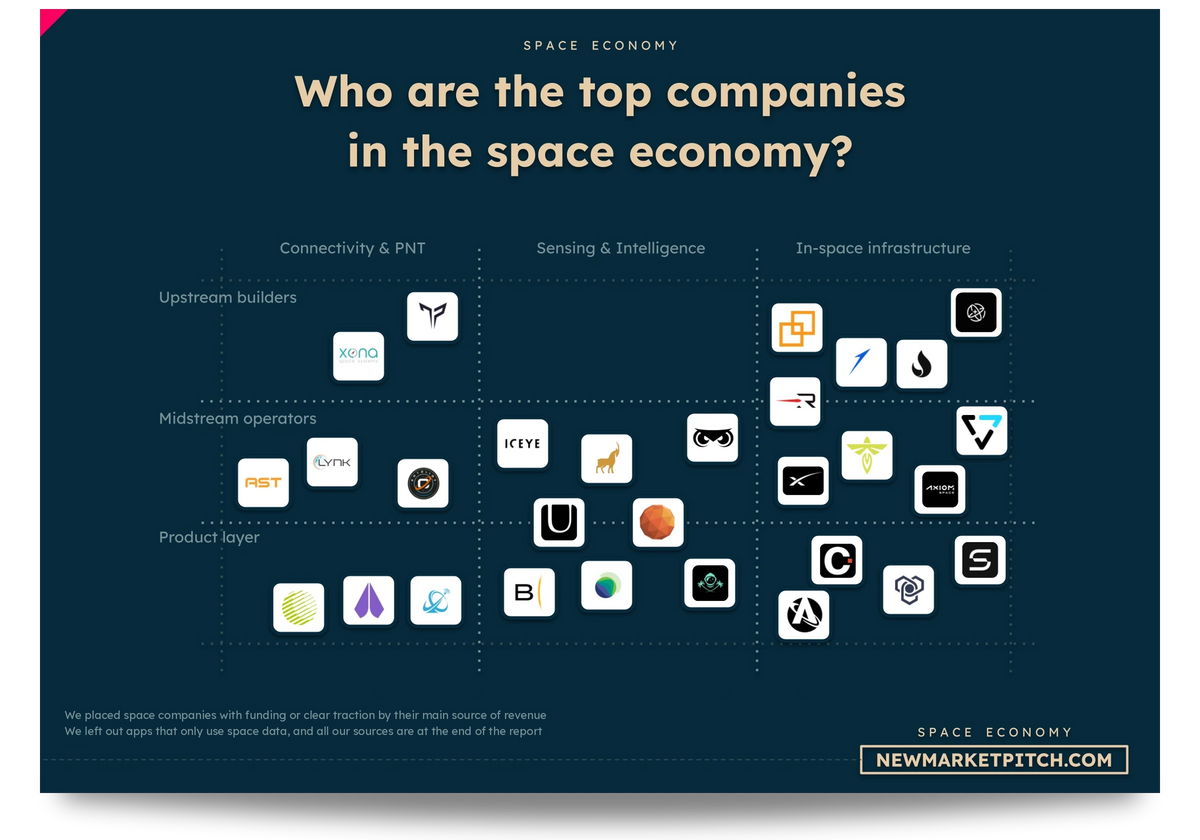
Tesla and SpaceX also have a credible alternative to merging: keep doing more business with each other. They can expand Megapack purchases, share infrastructure, sign technology agreements and coordinate AI or chip projects without asking Tesla shareholders to exchange their stock. A merger therefore has to offer more than cooperation they can already get through contracts. Cooperating through contracts is an option for both, and we map the main players and challengers around them in our space economy report.
Our conclusion is that a Tesla-SpaceX merger is more likely than it looked a year ago and probably more likely than not over a long enough horizon. The formal committees, existing financial ties and growing technology overlap make the idea credible. But the Tesla premium, shareholder vote, governance conflicts and China-defense problem are large enough that the transaction could still be delayed, changed or abandoned.

Written by the New Market Pitch teamWe track new markets so founders and investors can move faster. About us


This is just a preview page. Don’t worry if a number looks old: the report gets refreshed, and you’ll always get the latest version.
Where do the Tesla and SpaceX merger talks stand right now?
The Tesla-SpaceX merger has moved from fan speculation to a formal review, without a price, a structure or a signing date so far.
SpaceX said in its latest 10-Q that its board formed a special committee to evaluate a potential combination with Tesla. Tesla's own quarterly filing says its board created a special committee to explore ways to deepen the relationship with SpaceX, including a possible business combination. Both companies also say there is no assurance that a transaction will happen.
Musk made the same point on SpaceX's October 20 earnings call. He said a combination has merit, but calling it certain would be overstating things. That leaves the companies in an unusual middle ground: this has moved well beyond speculation, but the two committees still have to agree on price, control, governance and a path through the Tesla vote.
Recent prediction-market pricing points the same way. The odds rise a lot when traders get more time, which suggests a serious process with a credible chance of success, not a signing that looks close.
The table below shows the strongest current evidence for and against a Tesla-SpaceX merger.
| Signal | Date | What it points to |
|---|---|---|
| SpaceX board forms a special committee | Oct. 20, 2026 | For |
| Tesla board forms a special committee | Oct. 2026 filing | For |
| SpaceX says no decision has been made | Oct. 2026 filing | Against certainty |
| Tesla says there is no assurance of a transaction | Oct. 2026 filing | Against certainty |
| Musk says a combination has merit | Oct. 20, 2026 | For |
| Musk says certainty would be an overstatement | Oct. 20, 2026 | Against certainty |
| Tesla invested $2.0B in SpaceX | Mar. 2026 | For |
| Tesla recorded $626M of SpaceX revenue in nine months | Sep. 30, 2026 | For |
| SpaceX buys Tesla Megapacks | 2026 | For |
| Tesla shareholder approval is a high hurdle | Oct. 20, 2026 | Against |
| Musk controls about 82% of SpaceX voting power after IPO | Jun. 2026 | Easier SpaceX approval |
| Analysts disagree sharply on a Tesla premium | Oct. 21, 2026 | Against a quick agreement |
| China and US defense exposure complicate review | Oct. 22, 2026 | Against |
| Kalshi prices a merger before 2028 near 75% | Nov. 2026 | For, but not immediate |
Why are Tesla and SpaceX considering a merger now?
Tesla and SpaceX are closer financially and technologically than they were a few years ago, so combining them is easier to justify today.
The clearest change is money moving directly between the companies. Tesla's latest 10-Q says it recognized $221 million of revenue from SpaceX in the third quarter from Megapack sales and $626 million over the first nine months of 2026. SpaceX owed Tesla $729 million at the end of the quarter, although much of that amount came from milestones and capacity reservations for Megapacks that had not yet been delivered. Tesla also invested $2.0 billion in SpaceX common stock in March.
Their technology plans overlap more too. Musk has named AI software, chip design, robotics, connectivity and Terafab as areas where the companies could work more closely. Tesla needs huge amounts of power, computing and chips for autonomy and Optimus. SpaceX is expanding Starlink, launch infrastructure and AI computing.
A merger could put more of those decisions under one balance sheet, but Tesla and SpaceX can already cooperate through contracts and partnerships. The committees therefore have to decide whether common ownership adds enough value to justify one of the largest corporate combinations ever attempted.

How big would a combined Tesla and SpaceX be?
A combined Tesla and SpaceX would be worth roughly $3.5 trillion using market values around the start of the review, putting it among the largest public companies in the world.
Reuters put Tesla at about $1.5 trillion and SpaceX at about $2.0 trillion when the committees became public. At those values, a 10% move in Tesla is about $150 billion and the same move in SpaceX is about $200 billion.
The operating businesses are big too. Tesla reported $28.05 billion of third-quarter revenue and $804 million of net income. SpaceX reported about $14.6 billion of revenue and $4.4 billion of net income in the same quarter. Together, that is roughly $42.6 billion of quarterly revenue before removing transactions between the two companies. Sizing two businesses this different is hard, which is why we show our market size estimate with its assumptions in our space economy market report.
SpaceX is growing much faster and produced far more quarterly profit in that period, while Tesla still has the larger revenue base. That makes a simple sales multiple a poor way to decide what each side should own.
The table below shows the scale of the two businesses using comparable recent figures.
| Measure | Tesla | SpaceX |
|---|---|---|
| Recent market value | About $1.5T | About $2.0T |
| Q3 2026 revenue | $28.05B | About $14.6B |
| Q3 2026 net income | $804M | About $4.4B |
| Main businesses | EVs, energy, services | Space, connectivity, AI |
| Voting control | Dispersed | Musk-controlled |
| Recent direct link | $2.0B SpaceX investment | Megapack purchases |
| Public listing | Nasdaq: TSLA | Nasdaq: SPCX |
How much would Tesla shareholders need to be paid in a SpaceX deal?
Tesla shareholders would probably demand a premium, and that one number could move hundreds of billions of dollars between the two shareholder groups.
Reuters reported analyst views ranging from little or no premium to about 35%. At that Tesla market value, a 10% premium adds about $150 billion, 20% adds about $300 billion and 35% adds roughly $525 billion. In an all-stock deal, Tesla holders would receive that value through a richer exchange ratio and end up owning more of the combined company.
That is also why SpaceX is often described as the likely legal acquirer. Barclays has argued that an all-stock SpaceX acquisition of Tesla is the most likely structure, which fits SpaceX's larger recent market value and Musk's stronger voting control there. The legal label matters less than the exchange ratio: a large Tesla premium could still give Tesla investors a much bigger stake than a simple market-cap comparison suggests.
Tesla holders can argue that they are giving up a standalone bet on robotaxis, Optimus, energy storage and AI. SpaceX holders can answer that Tesla investors would be receiving shares in a faster-growing company with Starlink, launch and AI businesses. That disagreement is the negotiation.
The table below shows how quickly the Tesla premium changes the value transferred from the same hypothetical starting valuation.
| Tesla premium | Implied Tesla value | Extra value vs. no premium |
|---|---|---|
| 0% | $1.50T | $0 |
| 5% | $1.58T | $75B |
| 10% | $1.65T | $150B |
| 15% | $1.73T | $225B |
| 20% | $1.80T | $300B |
| 25% | $1.88T | $375B |
| 30% | $1.95T | $450B |
| 35% | $2.03T | $525B |
These are simple illustrations based on a $1.5T Tesla starting value, not proposed deal terms.

This is a preview page. Spotted an outdated number? That’s normal here. The report you get is always the freshest version.
Why is the Tesla shareholder vote such a big problem?
The Tesla vote may be the hardest single hurdle because Musk says the merger would need support from holders of a majority of all outstanding Tesla shares.
That is tougher than winning a majority of the shares that happen to vote. Tesla had roughly 3.95 billion shares outstanding and entitled to vote at its 2026 annual meeting, so low participation itself can hurt a deal.
Tesla has already been trying to get more retail shareholders involved in voting. Its voluntary retail voting program lets eligible investors give standing instructions for future meetings, although it does not apply to the 2026 annual meeting. That could matter in later votes because Tesla has a large retail shareholder base.
SpaceX is much simpler. Its IPO prospectus said Musk would hold about 82% of the voting power after the offering, and SpaceX's latest filing says a combination would require approval from its controlling shareholder. The difficult public vote is on the Tesla side.
Would Elon Musk control a combined Tesla-SpaceX company?
Musk would probably have far more voting power in a combined Tesla-SpaceX company than he has at Tesla today, but nobody knows the final percentage yet.
SpaceX's IPO documents said Musk controlled about 82% of the vote through a dual-class structure in which Class B shares carry ten votes each. His position at Tesla is much smaller. Reuters cited illustrative merger structures that could put his combined voting power around the high-50% range.
Those estimates can move a lot depending on the Tesla premium, the exchange ratio and what happens to SpaceX's super-voting shares. None of those terms has been agreed.
Musk also sits on both sides of the transaction as CEO and a major shareholder. He has said he is conflicted and is not participating in the special-committee negotiations, leaving independent directors to negotiate the terms before shareholders see them.
Would a Tesla-SpaceX merger save real money?
Some, yes. Tesla and SpaceX could cut some duplicated spending and internal contracting, but there is no public evidence for a giant cost-saving number yet.
The easiest savings are in areas where the companies already overlap. Tesla sells Megapacks to SpaceX. Both spend heavily on AI compute, custom chips, power infrastructure, engineering and advanced manufacturing. Musk has also pointed to Terafab, robotics and connectivity.
One balance sheet could make it easier to decide which company funds a factory, data center or semiconductor project. It could also reduce the number of related-party contracts needed when one side buys technology or capacity from the other. One balance sheet could simplify who funds what; our report on the space economy looks at the business models that actually make money.
The overlap still has limits. Building cars, launching rockets, running Starlink and training AI models require very different assets and teams. Cost savings help the case, but they are unlikely to settle a negotiation where the Tesla premium alone could be worth hundreds of billions of dollars.

Preview only. Some numbers may have changed since we made this page, but your report will be up to date.
Does SpaceX need Tesla more than Tesla needs SpaceX?
Not really. SpaceX is already stronger than Tesla on several recent financial measures, so this does not look like a rescue of SpaceX by Tesla.
SpaceX reported about $14.6 billion of third-quarter revenue, up more than 160% from a year earlier, and about $4.4 billion of net income. Tesla reported $28.05 billion of revenue and $804 million of net income in the same quarter. SpaceX also entered the public market at a valuation above Tesla's recent level.
Tesla still brings assets SpaceX can use, including batteries, Megapacks, manufacturing systems, AI work and a large public shareholder base. SpaceX brings Starlink, launch infrastructure, a fast-growing AI business and much tighter voting control.
The two companies have useful assets on both sides, which is why the merger case is about consolidation and control more than one company needing the other to survive.
Could China block a Tesla-SpaceX merger?
China alone probably would not decide the deal, but Tesla's China exposure creates one of the hardest national-security problems in a Tesla-SpaceX merger.
Reuters reported that Tesla's manufacturing dependence on China sits awkwardly next to SpaceX's role as a major US defense and government contractor. Chinese rules require sensitive driving data to stay inside China, while US authorities would scrutinize defense technology, data and access inside a group with major Chinese operations.
A combined company could try to manage that with separate data systems, restricted subsidiaries and tighter security controls. The political review would still be unusually sensitive because SpaceX works directly with the US government while Tesla depends on a country that Washington treats as a strategic rival.
Traditional antitrust may be the easier part. Tesla and SpaceX do not sell the same main products, so the bigger regulatory fight is likely to focus on national security, government contracts, data and technology access.
What do prediction markets say about the Tesla-SpaceX merger odds?
Prediction markets put a Tesla-SpaceX deal in the plausible camp, but traders are giving the companies much more time than a few months.
Recent Kalshi-linked pricing put the probability of a merger agreement before 2028 at about 75%. The odds were much lower for earlier deadlines: around 45% before April 1, 2027, around 39% before March 1, around 26% before February 1 and about 11% before January 1.
That curve says more than the headline 75%. Traders are giving the committees a decent chance of finding terms eventually, while betting that valuation, shareholder approval and regulatory work will take time. Shifts in betting odds like these are among the recent signals we follow every quarter in our report covering the space economy market.
Prediction markets can move quickly and have no role in the boards' decision. We use them here only as a live read on how investors are pricing the timing of the process.

This is just a preview page. Don’t worry if a number looks old: the report gets refreshed, and you’ll always get the latest version.
Did SpaceX falling below its IPO price change the Tesla merger math?
Only a little. SpaceX briefly falling below its IPO price changed the relative market values for a few days, but the stock recovered and merger terms will depend on a broader valuation negotiation.
SpaceX priced its IPO at $135 in June. Reuters reported that the shares first slipped below that level intraday in July, then fell much further in early November, closing at $123.62 on November 5. By November 9 they had recovered to $142.07.
A cheaper SpaceX stock can strengthen Tesla's argument for a better exchange ratio if Tesla holds up better at the same time. But both stocks move, and the committees are unlikely to price a multi-trillion-dollar transaction from one day's closing values.
The episode is still useful because it shows how quickly the starting point can change while the merger review is underway.
Could Tesla and SpaceX stay separate and still get most of the benefits?
Yes. Tesla and SpaceX can deepen their relationship without merging, which gives both committees a credible alternative if they cannot agree on price.
The companies already do business with each other. Tesla sells Megapacks to SpaceX, Tesla owns SpaceX stock, and they can expand cooperation through supply contracts, licenses, joint ventures or shared infrastructure.
Staying separate also keeps some risks apart. Tesla shareholders can own cars, energy and autonomy without directly taking on launch failures, defense contracts or SpaceX's AI spending. SpaceX holders can keep their exposure to rockets, Starlink and AI without absorbing Tesla's automotive cycle or China manufacturing risk.
That alternative raises the bar for a merger. Common ownership has to create enough extra value to beat cooperation through contracts.
Who would gain more from a Tesla-SpaceX merger?
Tesla shareholders could get the clearer short-term win if they receive a premium, while SpaceX shareholders would be betting more heavily on the long-term value of combining the businesses.
A 20% Tesla premium on that starting value would add a few hundred billion dollars to Tesla holders' side of the exchange, as the premium table shows. SpaceX shareholders would accept more dilution in return for owning Tesla's energy business, vehicle fleet, autonomy platform, manufacturing systems and robotics work inside the same group.
The upside for SpaceX holders depends on whether those businesses become more valuable together. That is harder to price than a premium paid on day one, so SpaceX's committee has a strong reason to resist giving away too much ownership. For where investor money is heading across this market, see our report on space economy investors.
For Tesla holders, the trade-off runs the other way. A richer exchange ratio gives them an immediate benefit, but they would also give up a standalone Tesla share and move into a much broader company with rockets, satellites, defense contracts and AI infrastructure.

So, will Tesla and SpaceX merge?
We think a Tesla-SpaceX merger is more likely than not over a long enough period, but the companies are still one major negotiation away from anything close to certainty.
The strongest evidence is concrete: both boards have special committees, Tesla owns SpaceX shares, the companies already do hundreds of millions of dollars of business together, and their plans increasingly overlap in AI, chips, energy, robotics and connectivity.
The obstacles are equally concrete. The committees have no agreed exchange ratio. The Tesla premium could move hundreds of billions of dollars. Tesla needs a difficult shareholder vote. Musk's position on both sides requires independent directors to handle the negotiation. Tesla's China footprint also creates a difficult fit with SpaceX's US defense work.
Tesla and SpaceX can keep expanding their relationship even if the merger stalls, so neither committee has to accept bad terms just to preserve the strategic partnership.
For now, the merger sits one step short of a deal investors can count on. The process is real and the strategic case is credible, but the exchange ratio is still missing. Until that number exists, the most important part of the transaction has not been agreed.
Our methodology
We built this answer from current company filings, official investor-relations material and first-rank financial reporting. The core evidence came from Tesla's and SpaceX's latest SEC filings, SpaceX's IPO prospectus, Tesla's 2026 proxy materials, company earnings disclosures, Reuters reporting on valuation and regulatory questions, and recent market data. The research runs through November 11, 2026.
We treated the special committees as evidence of a formal review, not as an agreed transaction. Company-confirmed facts are kept separate from analyst scenarios. No analyst exchange ratio, premium or control estimate is presented as a negotiated term. The premium table uses a $1.5 trillion Tesla starting value only to illustrate the size of the negotiation.
For operating comparisons, we used the same quarter for Tesla and SpaceX wherever possible. Revenue, market value and profit are kept as separate measures. The combined revenue figure is a simple sum before removing intercompany transactions and is not presented as pro forma merger revenue. Prediction-market prices are used only as a measure of current trader expectations.
Stock prices and merger odds can move quickly, so recent market values are used mainly to show scale and negotiation sensitivity. SpaceX's move below its $135 IPO price is treated as a temporary trading event because the shares later recovered above that level.
Key primary sources include SpaceX's third-quarter 2026 filing and Tesla's 2026 proxy statement.

Written by the New Market Pitch teamWe track new markets so founders and investors can move faster. About us